World Bank Returns to Damascus
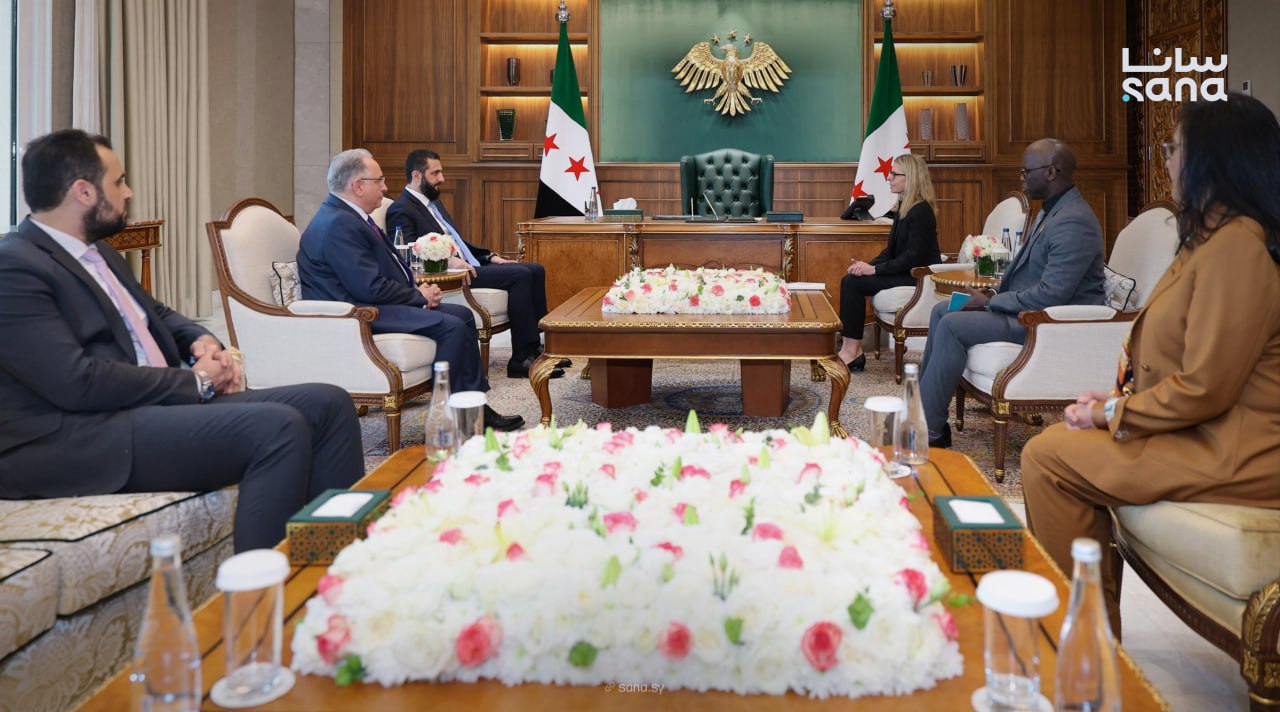
President Ahmed al-Sharaa received a World Bank Group delegation at the People's Palace in Damascus on 18 November 2026, in one of the highest-level meetings between the Syrian government and the multilateral lender. The delegation was led by Anna Bjerde, the World Bank Group's Managing Director for Operations, and the talks were attended by Finance Minister Mohammad Yisr Barnieh.
The two sides discussed ways to deepen cooperation, support Syria's economic recovery and reconstruction, and build the institutional capacity needed to improve public services and advance sustainable development.
A $216 Billion Price Tag
The World Bank estimates that rebuilding Syria will cost about $216 billion (USD), a figure that frames the scale of the task facing the government and its external partners. Against that need, the Bank's current program in the country stands at roughly $500 million.
The gap between the headline estimate and present commitments underscores why officials are seeking a longer-term engagement rather than one-off disbursements.
Five-Year Partnership Framework
Bjerde said the new Country Partnership Framework for the next five years will focus on reconstruction, growth, investment and job creation. Discussions also touched on the role of the private sector, the rule of law, and strengthening state institutions.
To shape those priorities, the Bank held consultations with 14 Syrian ministries, signaling an attempt to coordinate across the government rather than channel support through a single agency.
Scale of the Damage
Before the palace meeting, the delegation toured the Jobar neighborhood of Damascus, where the Bank cited destruction of about 93 percent of the area. The surrounding conflict affected roughly 250,000 people, illustrating the physical starting point for any reconstruction plan.
Such on-the-ground assessments are expected to inform how the five-year framework allocates early funding.
What the Re-engagement Signals
A multiyear framework with the World Bank marks a step toward reconnecting Syria's economy with international financing after a long period of isolation. The emphasis on investment, jobs and institutions points to conditions the government will need to meet to unlock larger flows.
For a currency that has drawn support from expectations of external inflows, the direction of this engagement will matter more than any single announcement.