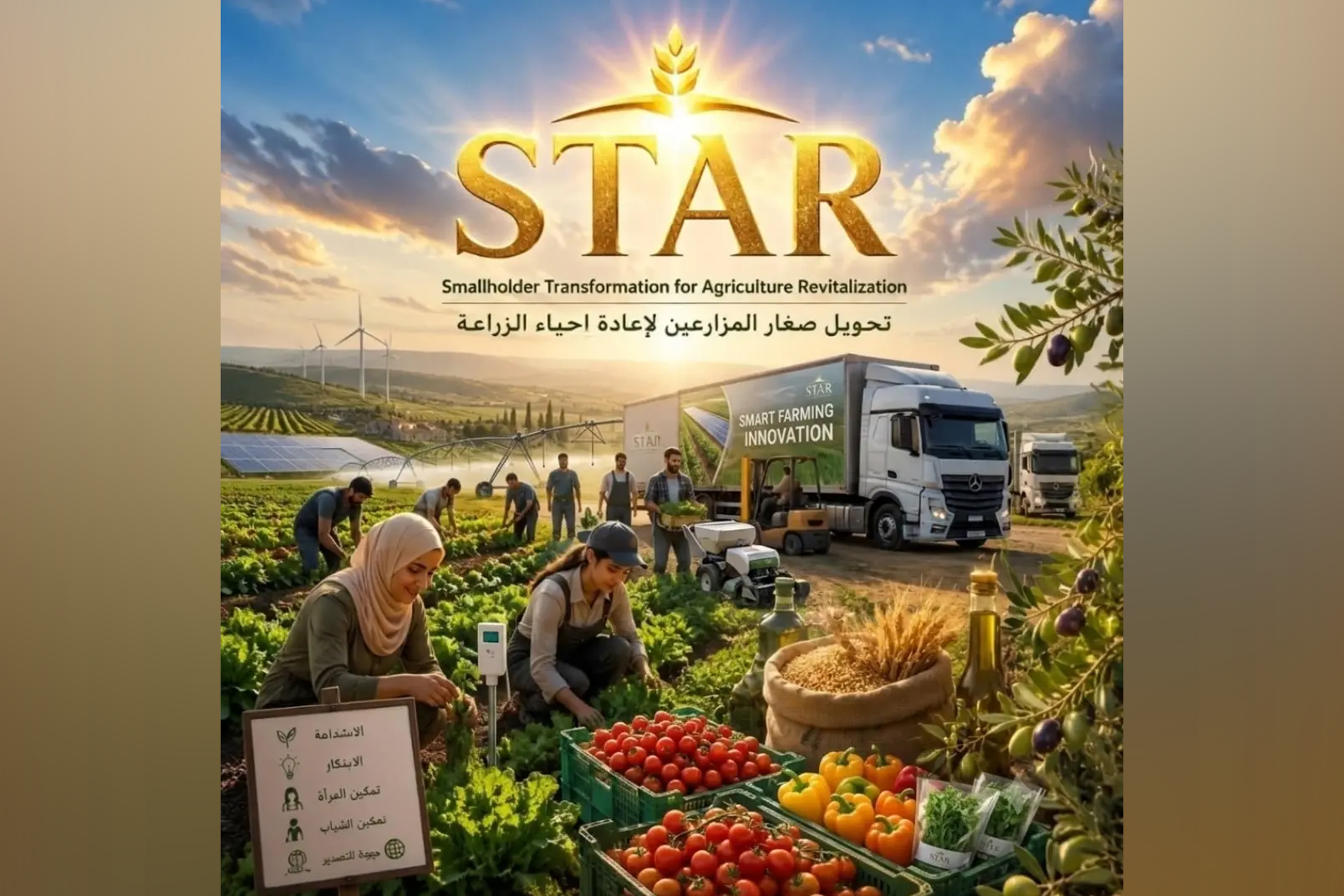
A World Bank-Backed Program
Syria has launched a six-year agricultural program financed by a $175 million grant from the World Bank, aimed at raising farm output, strengthening value chains, and improving food security. Details of the program, known as STAR, were set out on 28 September 2026.
The program supports crop production, livestock, cooperatives, and the private sector, while promoting digital transformation and more efficient agricultural services across the country.
Three Working Tracks
The program is built around three tracks: improving the quality of agricultural inputs, developing laboratories and quality-certification systems, and linking production to markets. It treats the farm value chain as a single system, from inputs through to the point of sale.
Planned measures include rehabilitating seed screening, sterilization, and storage centers and supplying improved, drought-resistant seed to help crops withstand harsher climate conditions.
Toward Export Markets
Food-safety, plant- and animal-health, and agricultural-research laboratories are to be modernized and accredited to international standards. Farmers and cooperatives will be supported in obtaining Good Agricultural Practices (GAP) and organic certification to ease access to foreign markets.
The program also targets packaging, branding, and the reduction of post-harvest losses, with particular attention to high-value export crops such as olives and pistachios.
Cooperatives and Contracts
Cooperatives and productive alliances form a central pillar. A matching-grant mechanism will require beneficiaries to cover part of project costs, with the program funding the remainder, a structure intended to reinforce ownership and investment discipline.
Productive alliances are to connect farmer groups directly with factories, exporters, and wholesalers through clear contracts, while the legal framework governing cooperatives is to be updated so they can operate as more flexible economic entities.
Where Funds Will Go
Geographic allocation of the program's interventions will follow technical criteria set in coordination with the World Bank, including the level of need and food insecurity and an area's importance for wheat and livestock production.
Safe access and the capacity to carry out interventions will also shape where resources are directed, alongside plans to modernize rules on seed, fertilizer, pesticides, and animal feed and to accredit private-sector suppliers.