US Lifts Terror Designation
The United States has removed Syria from its list of state sponsors of terrorism, clearing one of the largest obstacles to the country's return to the international financial network. The decision opens the way to rebuilding correspondent banking ties, trade finance and investment after years of isolation.
The timing drew attention as Damascus hosts its international fair, which has gathered Syrian and foreign companies and investors. Officials say the shift can move recent interest and memoranda toward the actual financing and execution of projects.
Correspondent Banking Reopens
Removing the designation lifts a factor that weighed heavily on the compliance policies of international financial institutions and on Syrian banks' relationships with correspondent lenders. The gradual return is expected to run through several channels.
These include personal transfers through licensed money-transfer companies, trade-finance lines, letters of credit and payment guarantees. A deputy head of the Syrian-American Business Council said the move opens the door to reassessing banking relationships and rebuilding them on clearer, more transparent foundations.
Payment Rails Restart
Payment channels are already taking concrete steps. On 27 August 2026 the governor of the Central Bank of Syria carried out the first Mastercard payment in the country after a suspension of more than 15 years, in cooperation with the central bank, a Syrian banking group and the card network.
The operation moved the payment system from technical testing to live acceptance of international card payments. Officials expect the process to widen later through digital payment platforms, electronic wallets and invoice-collection systems.
Reforms Behind the Shift
The opening followed domestic reforms aimed at rebuilding confidence in financial institutions, among them Legislative Decree No. 114 of 2025, which regulates foreign investment and sets a clearer legal framework for investors.
An International Monetary Fund assessment issued in early August 2026, after a mission to Damascus, said the economy was still recovering and projected growth above 10 percent in 2026, with strong performance continuing into 2027. A recent World Bank grant of $100 million (USD) is directed at modernizing the financial sector.
What Investors Watch
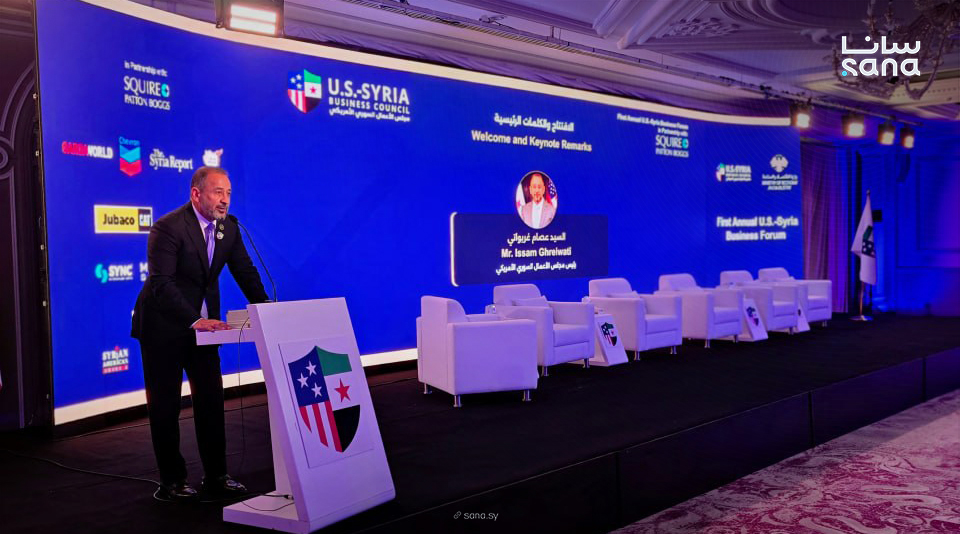
The head of the Syrian-American Business Council described the change as a pivotal juncture that shifts the relationship from building trust toward long-term economic partnerships. He said telecommunications, financial services, payments and renewable energy could draw early practical interest, while large infrastructure projects need more mature financing tools.
He added that stronger investor confidence depends on a legislative framework that protects investment and guarantees the transfer of profits, alongside greater central bank transparency and upgraded technical infrastructure for the banking sector.