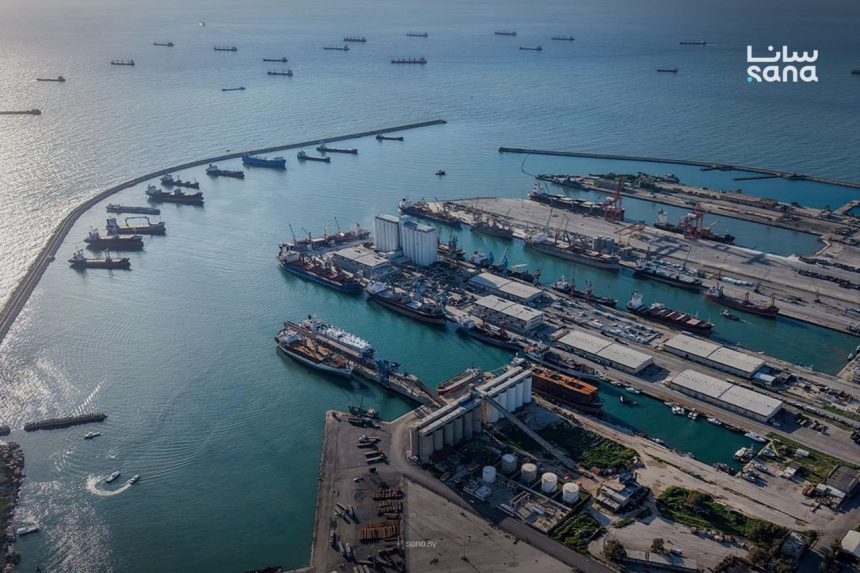
Shipyard Deal at Tartus
Syria's General Authority for Ports and Customs has signed an agreement with a Turkish maritime-industries company to build and operate an integrated shipyard at the port of Tartus on the Mediterranean coast. The contract, concluded on 15 January under a build-operate-transfer (BOT) model, covers the construction, repair, and maintenance of commercial and government vessels.
The shipyard is designed to combine new vessel construction with repair and maintenance work, moving the coastal port beyond its long-standing role in handling imported cargo. It is intended to turn Tartus into a base for maritime manufacturing tied into regional transport routes reaching Gulf markets.
Investment and Employment
The operator has committed to invest no less than $190 million (USD) over the first five years of the project. Estimates put direct employment at about 1,700 workers, with roughly 3,500 additional indirect jobs expected across supporting trades once the yard is running.
The agreement obliges the company to draw at least 95 percent of its workforce from Syrian labor, and to run technology-transfer and training programs for local staff.
Terms of the Contract
Under the build-operate-transfer structure, the company finances, builds, and operates the shipyard for a set period before ownership passes back to the state. Vessels belonging to the Syrian government are to receive a 20 percent discount on the pre-tax value of their maintenance invoices.
The project is presented as a step toward integrated logistics and transport chains linking the port to markets beyond Syria's borders, and as a shift from a transit point toward an industrial and logistics hub.
Effect on Foreign Currency
Backers of the project expect it to bring in foreign currency by attracting maintenance work for foreign-flagged ships, while reducing the hard-currency outflow spent on servicing Syrian vessels at yards abroad. Both effects would modestly support the country's external balance, with added demand flowing to local suppliers and services.
The Syrian pound (SYP) stood at about 13,160 to the US dollar (USD) on 12 August 2026, effectively unchanged over the previous day.