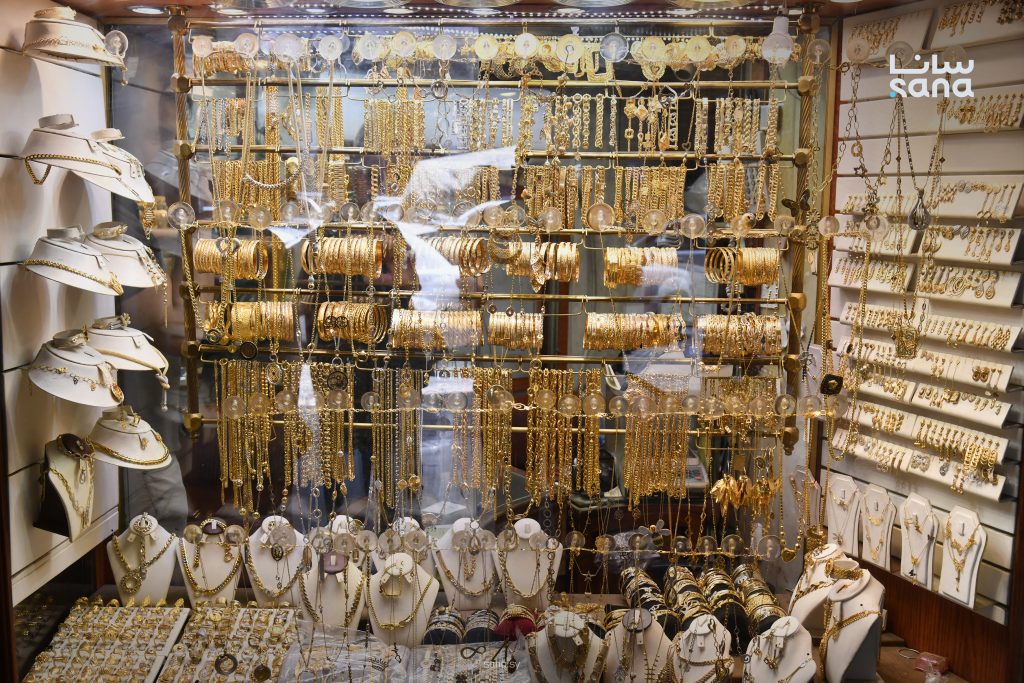
Local Jewelry Dominates
Gold jewelry made inside the country accounts for about 75 percent of the pieces traded in the Syrian market, while imported items make up the remaining 25 percent. The figures were set out on 16 November 2026 by the head of the body that regulates the sector.
The General Establishment for Precious Metals Management, created in February 2025, operates as a financially and administratively independent authority tasked with organizing and developing the gold and precious-metals trade.
Fees on Imported Gold
Imported gold jewelry carries two charges on entry. Each gram is subject to a customs duty of one US dollar (USD) and a separate hallmarking, or "wasm," fee of two dollars, for a combined cost of three dollars per gram.
The authority is empowered to add further fees on imported jewelry when needed, a measure described as a way to shield domestic workshops from foreign competition. Imports and exports of gold fall under General Import and Export Law No. 34 of 2023.
Monthly Import Volumes
Roughly 800 kilograms of gold bullion and about 1,000 kilograms of gold jewelry enter the country each month. Officials noted that the volumes shift with supply and demand rather than holding steady.
The imported jewelry competes directly with locally produced pieces, a contest the fee structure is intended to tilt toward domestic workshops on price.
Pricing Oversight
The authority also supervises gold pricing, working through goldsmiths' associations in the governorates to set reference rates for the market. Its mandate spans both the regulation of trade and the development of domestic production.
That dual remit frames the body as more than an enforcement office: alongside policing imports, it is charged with building up the local sector and the craftsmanship behind it.
Push for Self-Sufficiency
The stated goal is for the market to rely entirely on Syrian-made jewelry and to reduce dependence on imports over time. The authority has pointed to the skill of local craftsmen as a basis for exporting Syrian jewelry and opening foreign markets.
With domestic workshops already supplying roughly three quarters of the pieces on sale, officials frame cutting reliance on imports as a way to keep more of the trade, and its value, inside the country.