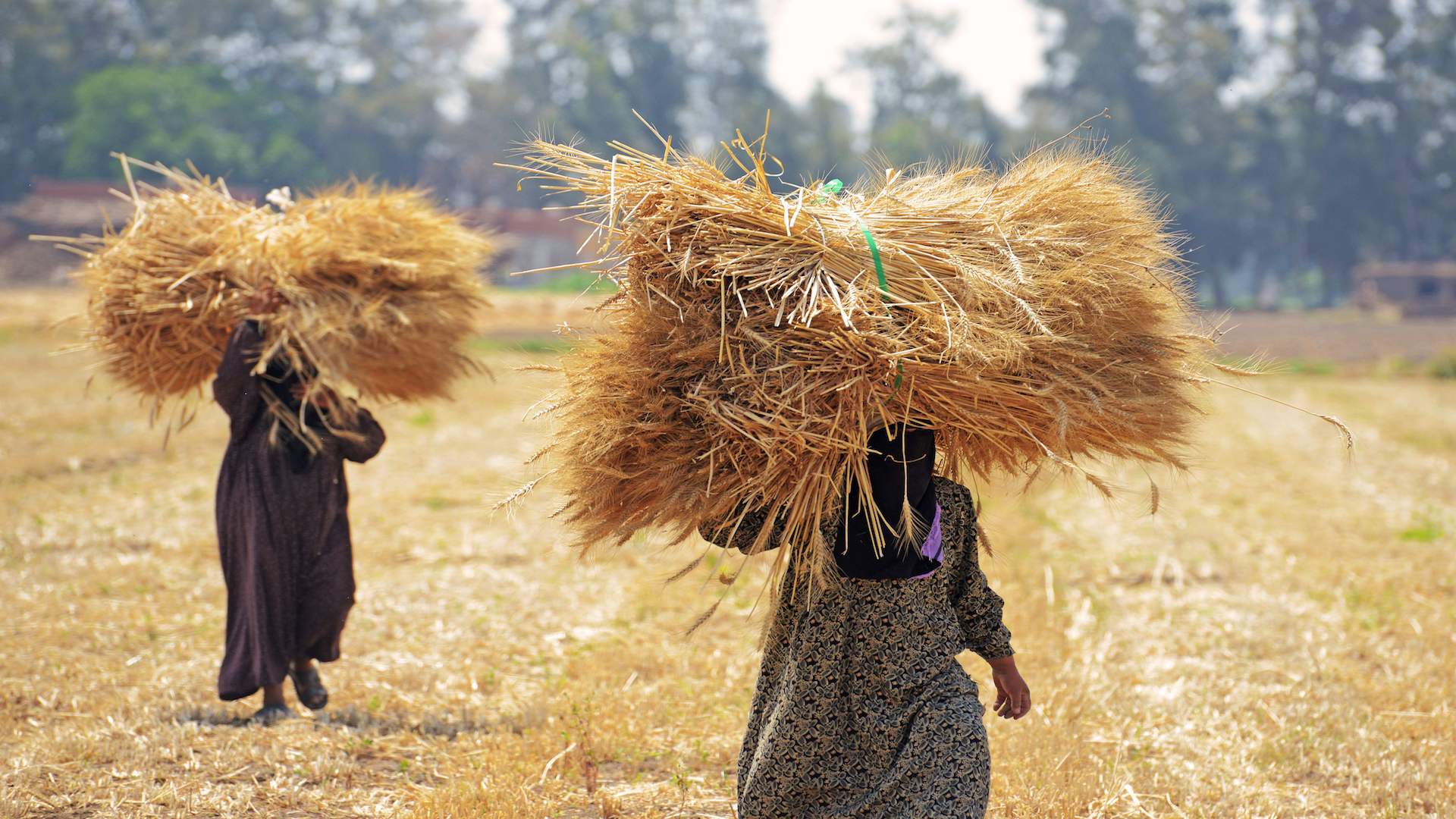
Closing the Wheat Gap
Syria may not need to import wheat in 2026, the Syrian Grain Corporation said recently, in what would be the first year without foreign supplies since the country slipped from a wheat exporter to a structural importer more than a decade ago.
Officials put current stocks at roughly one million tons, with another 1.5 million tons due in from the new harvest. Annual consumption runs at about 2.5 million tons, leaving the balance close to even without external purchases.
From Surplus to Imports
Before 2011, Syria produced about 4 million tons of wheat a year on more than 1.7 million hectares, enough to cover domestic demand and export the remainder. After more than a decade of war, the planted area shrank by an average of 6,800 hectares each year, and output collapsed in the worst seasons to 271,000 tons—about 7 percent of what the country needed.
The shortfall pushed Syria into the global market for roughly 1.5 million tons annually at a cost near US$400 million (USD), with Russia, Romania, and Ukraine as the main suppliers. A United Nations Food and Agriculture Organization report in June 2025 still pointed to a deficit of 1,073,000 tons, with only 40 percent of farmland sown and drought damaging swathes of Hasaka, Aleppo, and Homs.
A Wetter Season
Saeed Ibrahim, director of agricultural economy and planning at the Ministry of Agriculture, said the current season has benefited from heavy rainfall and a favorable distribution of precipitation. Of a 3.4 million-hectare winter plan, about 2.8 million hectares were actually sown—an execution rate he described as high relative to recent years.
The improvement extends across wheat, barley, legumes, and fodder, medicinal, and aromatic crops. Strategic seed varieties used in these crops are produced locally through the General Establishment for Seed Multiplication and selected for tolerance to drought and local conditions.
Doubling Down on Seeds
To consolidate the gains, the ministry plans to roughly double a seed-and-fertilizer support program that reached 300,000 hectares this season. The target for next season is between 600,000 and 700,000 hectares.
The current season is good due to abundant rainfall and an appropriate distribution of precipitation.
Ibrahim, speaking on a televised economic program, framed the rebound as a chance to broaden state support to a wider slice of growers.
Beyond Bread
The agricultural rebound is also showing up in trade. Winter vegetables were planted at 227 percent of the official plan, and refrigerated trucks loaded with Syrian vegetables and fruit have begun moving daily again to Gulf states and neighboring countries.
The Ministry of Agriculture has also asked the National Import-Export Committee to block selected agricultural imports during peak local production windows. A recent decision halting imports of certain summer fruit and vegetable varieties is credited with supporting domestic growers.