A Three-Year Food Accord
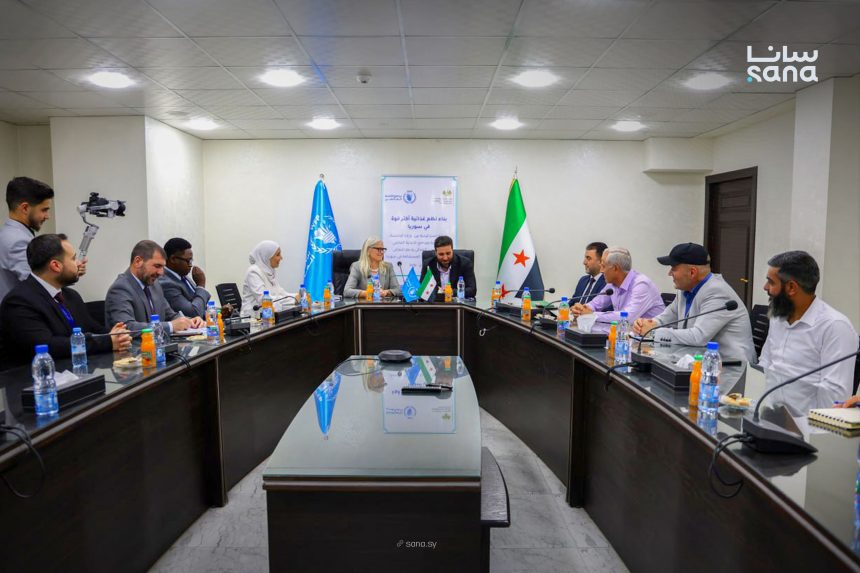
The Ministry of Economy and Industry and the World Food Programme (WFP) signed a three-year memorandum of understanding in Damascus on 19 July 2026 to develop Syria's food value chain. The agreement was signed by the Deputy Minister of Economy and Industry for Internal Trade and Consumer Protection, Maher Khalil al-Hassan, and the WFP Country Director, Marian Ward.
The memorandum sets a three-year horizon for cooperation and frames the work within Syria's broader economic-recovery priorities, tying food-sector rehabilitation to the government's stated recovery agenda.
From Bakeries to Silos and Mills
The accord shifts the focus of the two sides' cooperation from developing bakeries toward meeting the needs of grain silos and mills. It provides for rehabilitation projects covering bakeries, mills, and silos, along with the exchange of expertise, joint needs assessments, and programs carried out together in line with national priorities.
The emphasis falls on the physical assets that move wheat from harvest to household: milling capacity, storage, and the ovens that turn flour into bread.
Eighteen Months of Groundwork
Officials described the agreement as the third memorandum between the two sides within an 18-month period, signaling a move from coordination toward practical implementation. Work completed during that period is estimated at 60 to 70 percent of the bakery-sector development effort.
That share reflects progress made since the two sides began working together, and the new accord extends the effort into grain handling and milling rather than bakeries alone.
Grain Chain in Focus
The stated aim is to raise the efficiency of infrastructure across the grain and bread sectors, strengthen the sustainability of the food supply chain, and reinforce the capacity of institutions to meet domestic market demand.
By turning earlier coordination into delivery, the two sides signaled that the next phase will center on silos and mills, the links that carry grain from storage to the mill before it reaches the bakery.