A Cross-Border Banking Accord
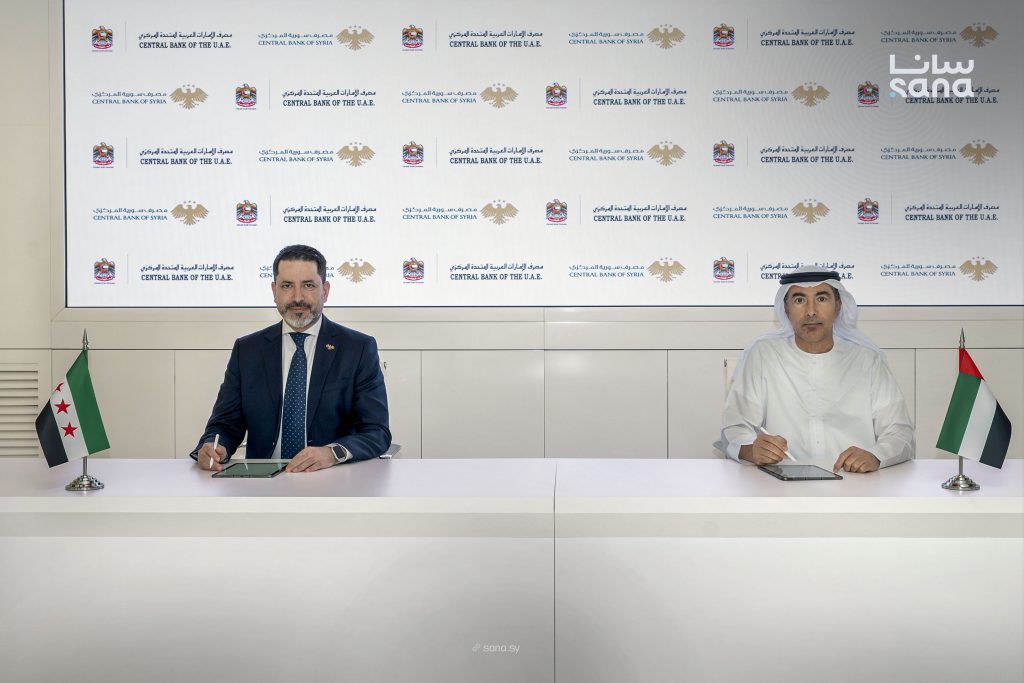
The governor of the Central Bank of Syria and the governor of the Central Bank of the United Arab Emirates signed a memorandum of understanding on 6 October 2026 to strengthen cooperation across financial, regulatory, and technical fields of mutual interest.
The agreement sets a framework for the two institutions to work together on shared priorities rather than committing either side to a specific transaction or sum.
What the Memorandum Covers
The memorandum spans payment systems, monetary policy, financial technology, sustainable finance, financial inclusion, and consumer protection, areas that shape how money moves within an economy and across borders.
Cooperation on payment systems bears directly on the mechanics that let banks clear transfers, a persistent constraint for Syrian lenders seeking to reconnect with international counterparts. The stated goal is to lift the sector's operational efficiency and competitiveness.
Framed as a Reform Opportunity
The Syrian central bank governor called the memorandum “an important opportunity to develop financial inclusion, build capacities, and enhance the efficiency of regulatory frameworks,” tying it to raising the banking sector's ability to meet regional and international standards.
He added that the aim was for the memorandum to “form a basis for practical, sustainable tracks” and to open wider horizons for banking partnership between the two countries.
A Regional Backdrop
The signing followed the Syrian governor's chairing of the 50th session of the Council of Arab Central Bank Governors in Abu Dhabi on 29 September 2026, a gathering of Arab monetary and banking leaders convened to examine financial issues in the region. He holds the council's presidency this year.
The memorandum is a framework rather than a binding financial commitment, and its practical effect will depend on the specific programs and timelines the two central banks choose to pursue under it in the months ahead, as well as on the broader pace of Syria's return to regional financial networks.