Crossings on the Agenda
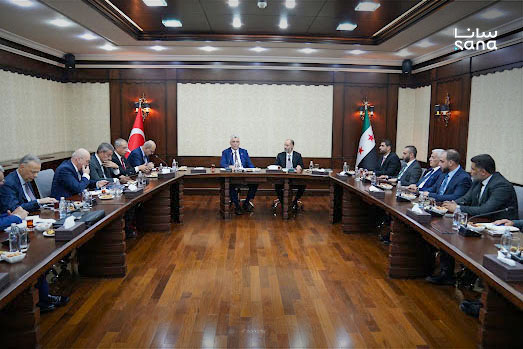
Senior Syrian and Turkish officials held talks in Damascus on 26 August 2026 on expanding the shared border crossings between the two countries and easing the movement of trade and transit traffic. The head of Syria's General Authority for Borders and Customs met a Turkish commercial delegation to review cooperation on trade, customs, transport, transit, and investment.
The discussions centered on raising the capacity of joint crossings, reducing congestion, and improving services for travelers and hauliers moving goods between the two markets. Both sides pressed for faster implementation of the projects under review.
Transit Traffic Surges
Transit truck movements have risen sharply, climbing from roughly 3,500 in 2025 to more than 30,000 during the first seven months of 2026. Bilateral trade between the two countries grew 42 percent over the past year.
Since 8 December 2024, the crossings have recorded about 5 million passenger movements and some 600,000 truck crossings, while an estimated 780,000 Syrians have returned home voluntarily through them.
Infrastructure Work Underway
The two sides discussed expanding and upgrading shared crossings, with particular focus on the Bab al-Hawa–Cilvegozu crossing and plans to create separate lanes and routes dedicated to transit trucks. They also reviewed technical and construction work to prepare the Qamishli–Nusaybin crossing for reopening.
Officials stressed the need to accelerate these projects to lift throughput and shorten waiting times at the border.
Regional Corridor Ambitions
Talks also covered customs fees, a shift from unloading and reloading cargo at the border toward direct truck crossing, temporary import arrangements, manufacturing for re-export, and the use of free zones. The Turkish side described Syria as a link connecting Turkey to Jordan, Iraq, Saudi Arabia, and the Gulf states, framing the crossings as part of an integrated regional network for transport and trade. Officials tied the push to reconstruction, noting that easier crossings support the movement of goods and the return of displaced Syrians alongside rising commercial exchange.