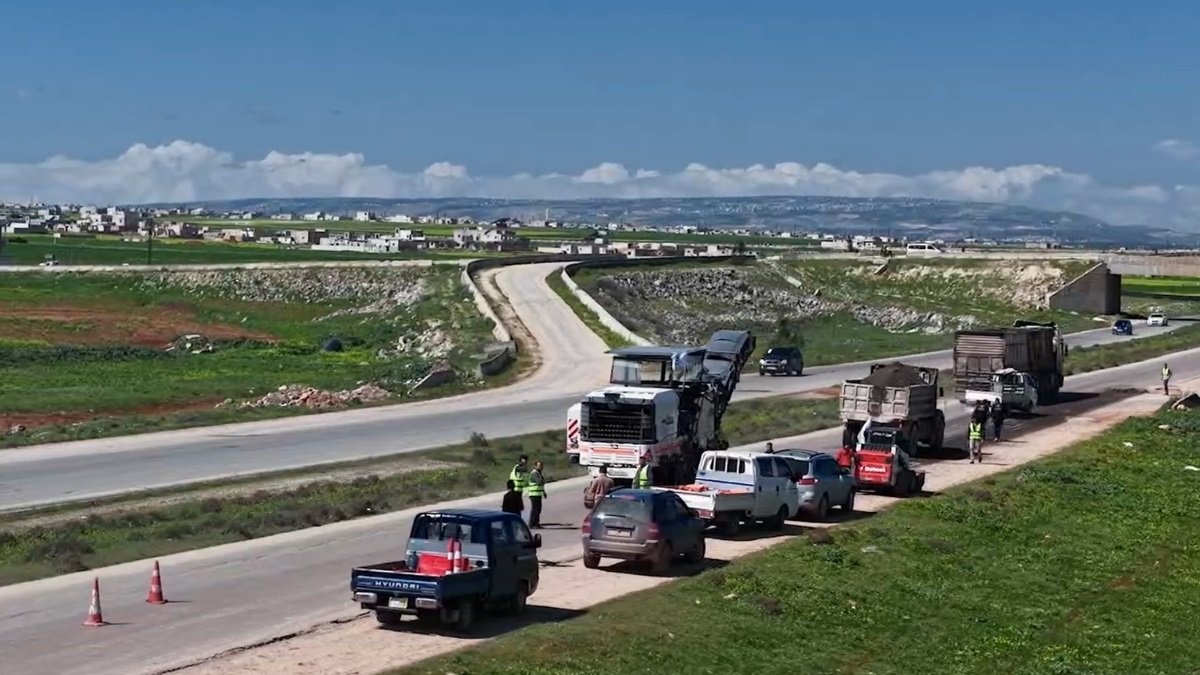
Land Corridor Reactivation
Syria's Minister of Transport Yaarub Badr said the government is moving on accelerated steps to restore the country's historical role as a strategic land corridor linking Europe and the Arabian Gulf, through a plan that combines reactivating road transit and rebuilding the railway network in coordination with neighboring countries.
Before 2011, the land route between the Turkish and Jordanian borders saw between 100,000 and 115,000 trucks pass through Syria each year, carrying goods among Turkey, the Gulf states and Europe. Officials say work is underway to simplify customs clearance and ease truck movement so that traffic can return.
Rail Grants From the World Bank
The minister disclosed talks with the World Bank for technical and financial support to the railway sector worth between $65 million and $200 million in US dollars (USD), structured as grants rather than loans, with the goal of bringing rail back as a regional transit channel.
Freight trains last operated between the port of Tartus and Iraq's Umm Qasr port via Baghdad in 2009 before the line was taken out of service. The state-owned Syrian Railways and the operator of the Latakia International Container Terminal have also signed a memorandum of understanding to link coastal ports to inland zones by rail.
Cross-Border Memoranda
The plan leans on a transport-and-logistics cooperation agreement signed in April 2026 by Syria, Turkey and Jordan, alongside parallel talks with Saudi Arabia to remove obstacles to the movement of goods. The minister said concrete results on truck transit could be expected before the end of 2026 if neighboring countries reach common understandings.
Rail Crossings and a New Damascus–Riyadh Line
Two rail connections with Turkey, at Maydan Ekbes and Al-Rai, would require rehabilitation before they could carry freight again. Sections of the old Hejaz railway linking Syria to Jordan could be brought back into service before the end of 2026 if funding is secured.
Badr also floated a new line that would run from Damascus to the Jordanian border and on to Saudi Arabia via Al-Qariyat, describing it as a strategic option for regional integration despite a likely cost in the hundreds of millions of US dollars.