Suspensions in the Oil Fields
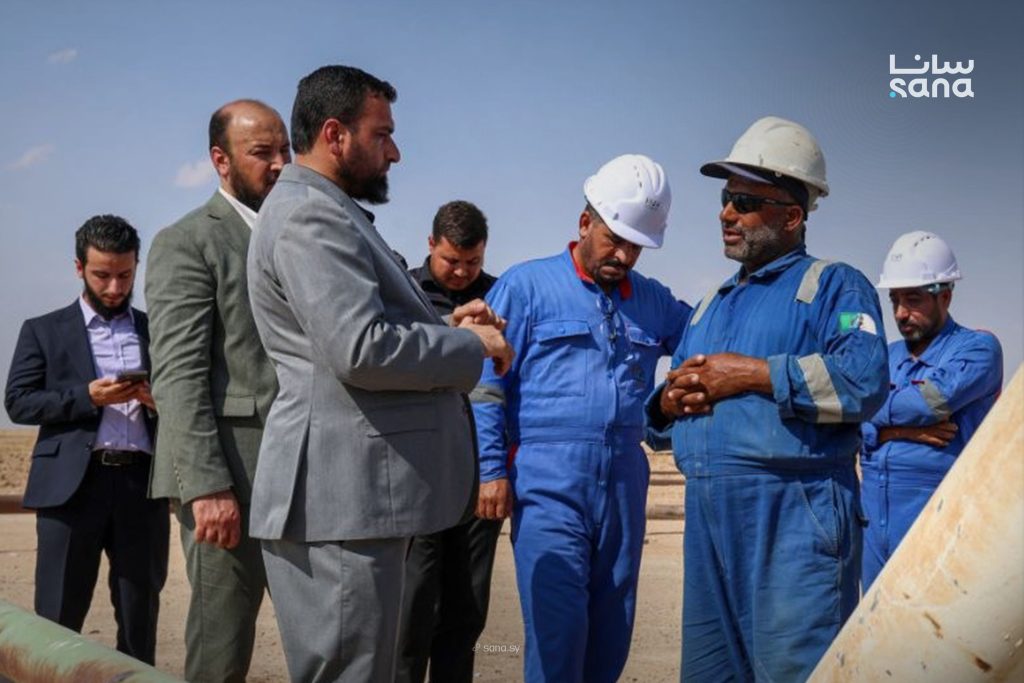
Syria's central oversight and inspection authority suspended nine officials working in the Deir ez-Zor oil fields on 22 August 2026 and referred them to the judiciary. The decision followed a three-month monitoring effort and a field inspection tour of several fields led by the authority's head, Amer al-Ali, alongside 22 inspectors.
The tour was carried out in coordination with the energy minister, Mohammad al-Bashir, and the governor of Deir ez-Zor, Ziad al-Ayesh, to match earlier reports against conditions on the ground.
Millions in Flagged Losses
Inspectors reported serious violations affecting oil production, transport, calibration, maintenance and contracting. Preliminary figures put damage to public funds at more than $8 million, tied to contracts, maintenance work and mismanagement, and concentrated in the Deir ez-Zor fields.
A separate review of crude transport contracts between the central region administration and haulage companies pointed to roughly $20 million in further losses, described as price differences under preliminary numbers.
Posts Placed Under Review
The suspensions covered the directors of the Deir ez-Zor fields and of oil transport and distribution in the central region, along with transport supervisors in the Deir ez-Zor and al-Omar fields.
They also reached production department heads and well-services staff at the al-Omar field, a contract supervisor and an oversight committee head at the al-Teim field, and a production department head at the al-Tanak field.
Contracts Canceled, Assets Targeted
Beyond the personnel measures, the authority directed the cancellation of contracts with several companies and contractors in the oil sector, citing shortcomings and breaches of contractual and integrity obligations.
It also recommended a precautionary seizure of the assets of those implicated and said investigations would widen to cover additional files uncovered during the review.
Guarding a Strategic Sector
The authority framed the measures as part of its mandate to protect public money and raise the efficiency of state institutions, stressing that the violations were linked to specific individuals rather than the wider workforce.
Oil remains one of Syria's strategic revenue sources, and the authority said monitoring would continue as responsibilities are assigned and legal steps are taken.