Hail and Floods Hit Crop Heartlands
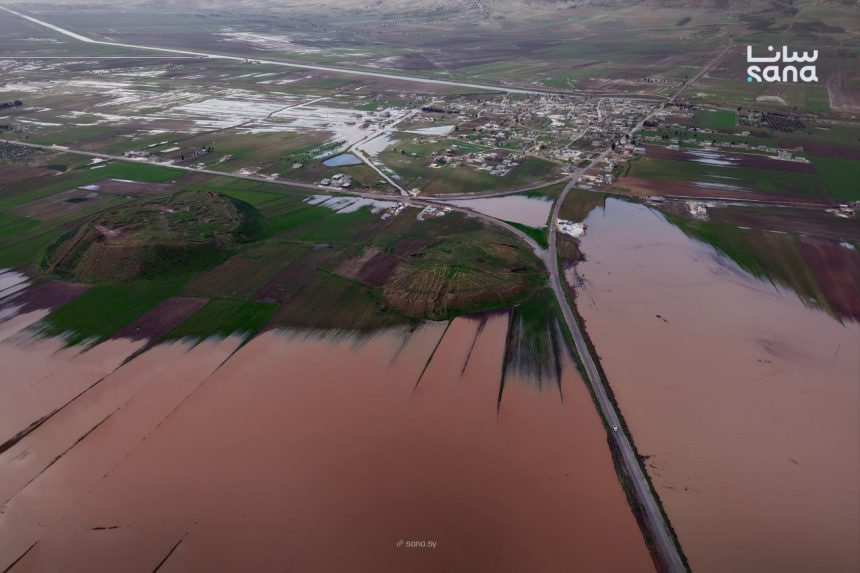
Recent storms and rainfall have inflicted broad agricultural losses across four Syrian governorates, the Ministry of Agriculture said on 21 April 2026, warning that the damage will leave a clear mark on the 2026 farming season. Heavy rain and powerful thunderstorms swept most of Syria from Thursday through dawn Sunday, sending water down valleys and pooling in low-lying areas, while heavy hail struck several regions over the weekend.
The Directorate of Agricultural Production Support placed the highest damage rates in the towns of Tafas and Dael in Daraa countryside, where wide areas of crops and fruit trees were hit, particularly open-field and tunnel-grown vegetables along with wheat and stone-fruit groves, after large hailstones fell.
Idlib Dam Damaged, Aleppo and Tartus Hit
In Idlib, heavy rainfall produced flash floods and inundated wide areas of farmland, alongside damage to the Al-Sayha earthen dam in the western countryside. In the Afrin area of Aleppo countryside, the damage was described as moderate, affecting vegetables, wheat and fruit trees from hail.
In the Al-Qadmus area of Tartus, hail damaged the tobacco crop, while heavy rain and inundated farmland also caused additional losses to wheat and fruit trees.
Damage Still Being Counted
Muhammad Saileen, head of the Agricultural Production Support Directorate, said it remains too early to publish a final damage figure because the affected areas are wide and access to some is difficult. Field teams from the production support and agriculture directorates are running on-site assessments based on initial reports, while extension units take in damage claims from farmers.
Saileen said the recent weather conditions "will leave a clear mark on the current agricultural season and expected production levels", an official signal of an anticipated drop in 2026 yields, even though no percentage was attached to the forecast.
Compensation and Early Warning
The ministry said it will compile named lists of affected farmers, refer them to provincial agricultural sub-committees chaired by governors, and forward them to the technical committee of the Drought and Natural Disasters Mitigation Fund. Approved compensation will be paid through the nearest agricultural bank in the affected area.
Saileen added that the ministry is working to set up a national integrated early warning system, building on the existing arrangement it operates with the Ministry of Emergency and Disaster Management to send warning messages to farmers ahead of expected hazards.