A Reckoning for State Banks
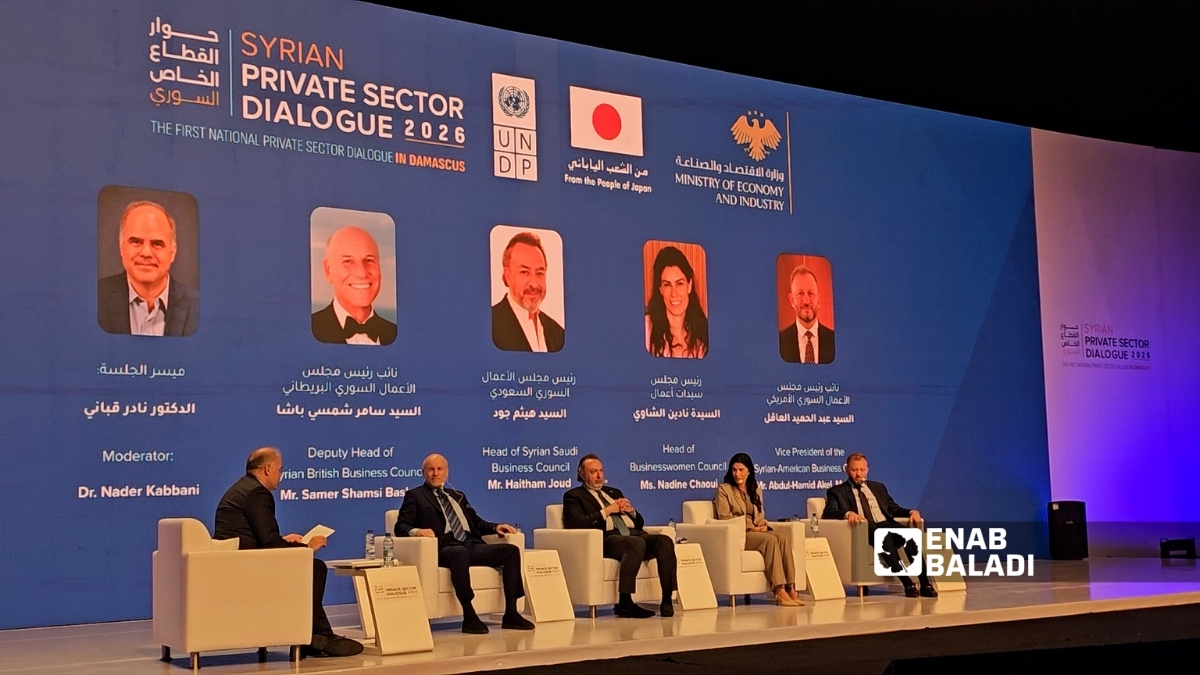
Syria's public banking sector took center stage at the first national conference for dialogue with the private sector, held at the Conference Palace in Damascus on 2 June 2026. Officials and finance specialists debated the sector's structural and legislative problems, the weight of sanctions, and proposals to overhaul institutions worn down by years of war and economic contraction.
Both the central bank governor and the finance minister attended, a sign that the future of the six state-owned banks has moved to the top of the economic agenda.
An International Assessment
A global consulting firm completed the first phase of a comprehensive review of the six public banks in May 2026, examining their performance and structure. A team of foreign and Lebanese bankers held intensive meetings with the managements of all six lenders.
The work proceeds under a memorandum of understanding signed by the Finance Ministry, the Qatar Fund for Development and the consultancy, with support from international bodies including the United States Treasury and the World Bank.
Three Possible Futures
The preliminary findings leave the state banks facing three broad scenarios:
- Restructuring into state-owned joint-stock companies with new management and revised pay scales.
- Privatization, opening the door to acquisition by foreign banks.
- Strategic partnerships with Arab and foreign banks, with Gulf institutions expected to play a central role.
Lending by the Numbers
Despite their difficulties, the public banks kept credit flowing. In 2023 they issued more than 1.2 trillion Syrian pounds (SYP) in loans across the agricultural, industrial, commercial, housing and services sectors.
The Commercial Bank of Syria accounted for about 450 billion SYP, the Agricultural Cooperative Bank 249 billion, the Popular Credit Bank 223 billion, the Real Estate Bank 170 billion, the Savings Bank 166 billion and the Industrial Bank 30 billion.
Investment and Inflation
The central bank governor said the monetary authority is working to reactivate the public banks, open the sector to investment and fully automate banking operations. He rejected the claim that foreign investment fuels inflation, arguing instead that it supports growth and creates jobs.
The Italian ambassador to Syria cautioned that the sector is not ready for inflows, contending that rebuilding international confidence — not lifting sanctions alone — is the harder task ahead.