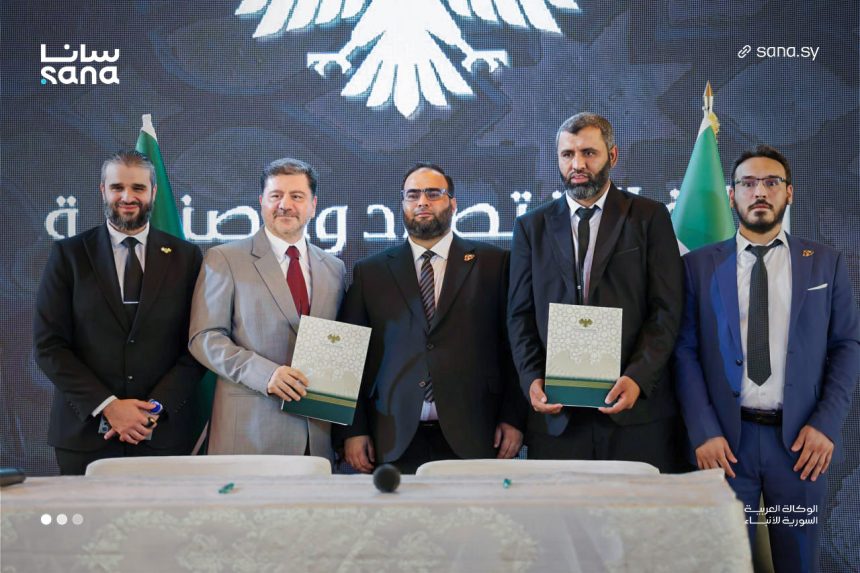
Steel Plant Agreement Signed
Syria's Ministry of Economy and Industry signed a memorandum of understanding with a Saudi holding company on 28 August 2026 to rehabilitate, modernize and operate the state-owned General Company for Iron and Steel Products in Hama, widely known as the Hama steel plant. The deal hands a foreign investor responsibility for reviving a state-owned industrial site in Hama.
Thirty-Year Term
The memorandum runs for 30 years, a long horizon that gives the Saudi partner a sustained role in running the facility rather than a one-off supply or repair contract. Under its terms, the company will install new, modern production lines at the plant as part of a phased overhaul.
The agreement combines rehabilitation, renewal and operation in a single long-term arrangement rather than splitting them across separate contracts.
Output Target
The plan sets a defined production goal: capacity is to be raised gradually to reach a minimum of 350,000 tons a year within four years of the agreement taking effect. The facility carries the formal name of the General Company for Iron and Steel Products.
Damascus Fair Backdrop
The memorandum was signed during the 63rd session of the Damascus International Fair, held under the slogan "Syria rises again." The event drew close to 1,000 participating entities representing 60 countries and runs from 28 August to 4 September 2026.
The fair's program set aside time for businesspeople, investors and official delegations to build partnerships and sign agreements, and the steel accord was among the deals concluded there.
Gulf Capital in State Industry
The arrangement places the operation and upgrading of a public-sector steel producer in the hands of a private Saudi holding firm for three decades, one of the concrete outcomes to emerge from the fair's investment track. It brings outside capital and management into a state-owned factory. For a public producer that had operated under state management, it marks a shift toward private, foreign-led operation.