Return to Brussels
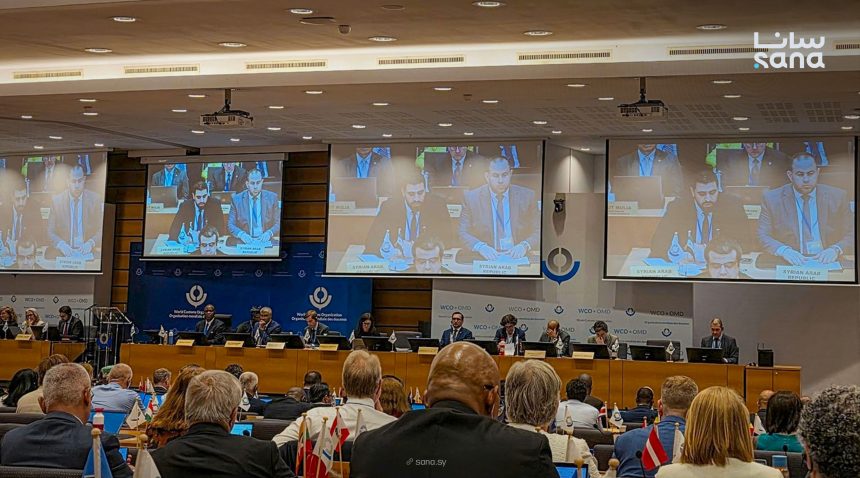
A Syrian delegation took part in the 147th and 148th sessions of the World Customs Organization Council in Brussels, the country's first participation in the body's governing meetings after years of absence. The sessions run through 27 June 2026 and gather representatives of the organization's 187 member countries and customs territories.
The delegation was led by the director of the General Customs Administration, Khaled Al-Barad, accompanied by the director of local and international relations at the General Authority for Ports and Customs, Mazen Alloush.
A Customs System Rebuilt
Officials used the gathering to outline a series of structural changes to the customs sector. These include the creation of a single General Authority for Ports and Customs to unify oversight, the enactment of a new customs law, and an updated tariff schedule aligned with international standards.
The authorities also pointed to the launch of a Syrian Customs Academy intended to train specialized staff, part of an effort to bring procedures and personnel into line with global practice.
Bidding for Trade Routes
The delegation framed the return as a step toward reconnecting Syria to international trade governance, stressing the country's location linking Asia, Europe, and the Gulf. One official said the country stands "ready to contribute to strengthening global supply chain resilience."
The council sets policy on customs cooperation, border security, trade facilitation, and the prevention of cross-border smuggling, areas where membership can ease the movement of goods across frontiers.
Currency in the Background
The reintegration push comes as the Syrian pound (SYP) has weakened by roughly 5 percent against the US dollar (USD) over the past week, trading near 13,400 to the dollar. A smoother customs regime and renewed access to international trade forums are presented as part of a longer effort to steady trade flows and state revenue.
Re-entry into the body does not by itself change tariffs or prices, but it signals an attempt to normalize the institutions that govern Syria's borders and external commerce.