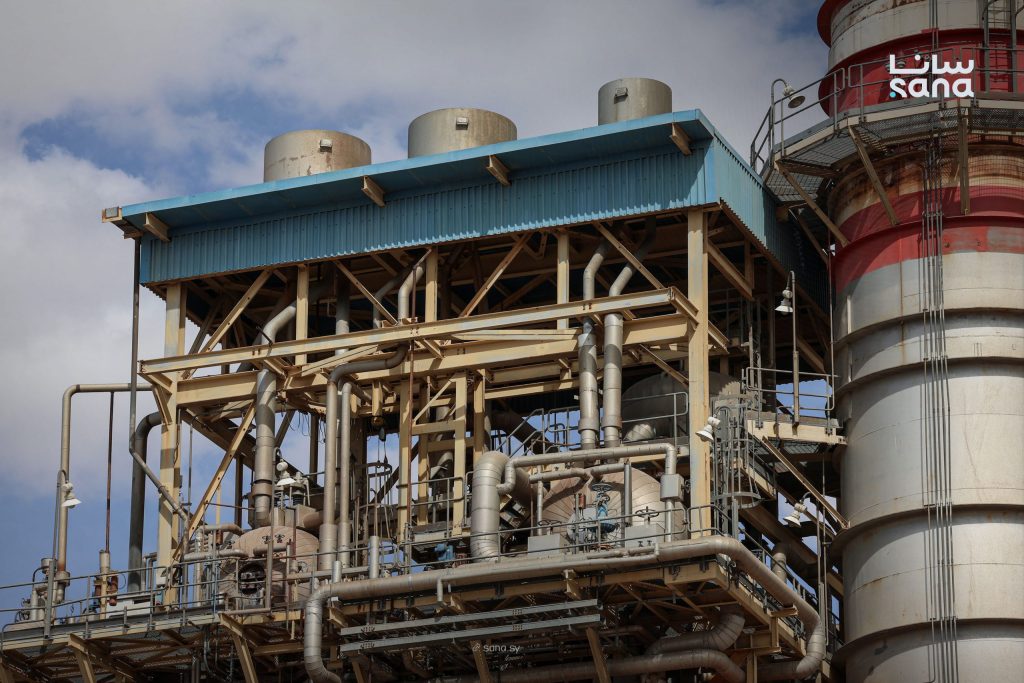
Grid Output Nears 3,500 MW
Syria's national power grid is generating about 3,500 megawatts, compared with roughly 915 megawatts at the time of liberation, in figures the Ministry of Energy released on 20 September 2026. The gains rest heavily on three stations clustered in the Rif Dimashq governorate: Deir Ali, Nasiriyah and Tishreen.
A recent interruption briefly pushed the three plants out of service, underscoring how closely electricity supply tracks fuel availability. Two of them came back quickly; the third remains down.
Three Southern Stations
Deir Ali, about 30 kilometers south of Damascus, is the largest of the three, with a nominal capacity near 1,500 megawatts across two combined-cycle circuits. The Nasiriyah plant, roughly 60 kilometers northeast of the capital near Jayroud, carries an operating capacity of about 450 megawatts and was formally relaunched early in 2026 once gas began flowing through Jordan.
Tishreen, in Eastern Ghouta between 40 and 50 kilometers from Damascus, has a nominal capacity of about 1,050 megawatts spread across steam, simple-cycle and combined-cycle units. Its steam section is under a full overhaul.
Gas Supply Is the Lever
The outage at Deir Ali and Nasiriyah stemmed from fuel supply rather than any fault in the generating units themselves. Technicians isolated the damaged segment and gradually re-pressurized the Arab Gas Pipeline between Adra and Deir Ali, allowing both stations to resume within less than 24 hours.
Tishreen stayed offline because of direct damage to its equipment and the gas line feeding it. Some of its steam units are built to run on either gas or fuel oil, but they are in rehabilitation and cannot serve as an immediate backup.
Who Feels the Shortfall
Output from the three plants flows into the unified national grid and is redistributed by load, yet their location makes them vital for Damascus, its countryside and the southern governorates of Daraa, Quneitra and Sweida. Rehabilitating a 120-megawatt block at Deir Ali alone improves service for more than 2 million people across those areas.
Lower generation reaches the productive sector directly. Beyond longer household rationing, it cuts the power quotas available to industrial zones such as Adra, to water-pumping stations and to essential utilities.
Building Backup Capacity
Energy Minister Mohammad al-Bashir has pointed to the restart of a generating unit near 700 megawatts at Deir Ali, alongside a program to recover about 120 megawatts more through a second expansion. Operators can also lean on dual-fuel units and raise loads at the Jandar, Banias, Mhardeh and al-Zara stations, as well as hydropower.
The recovery of two stations within a day reflected flexibility in managing supply shocks, while Tishreen's continued shutdown highlighted the need for looped gas routes, larger fuel reserves and a more diversified energy mix.