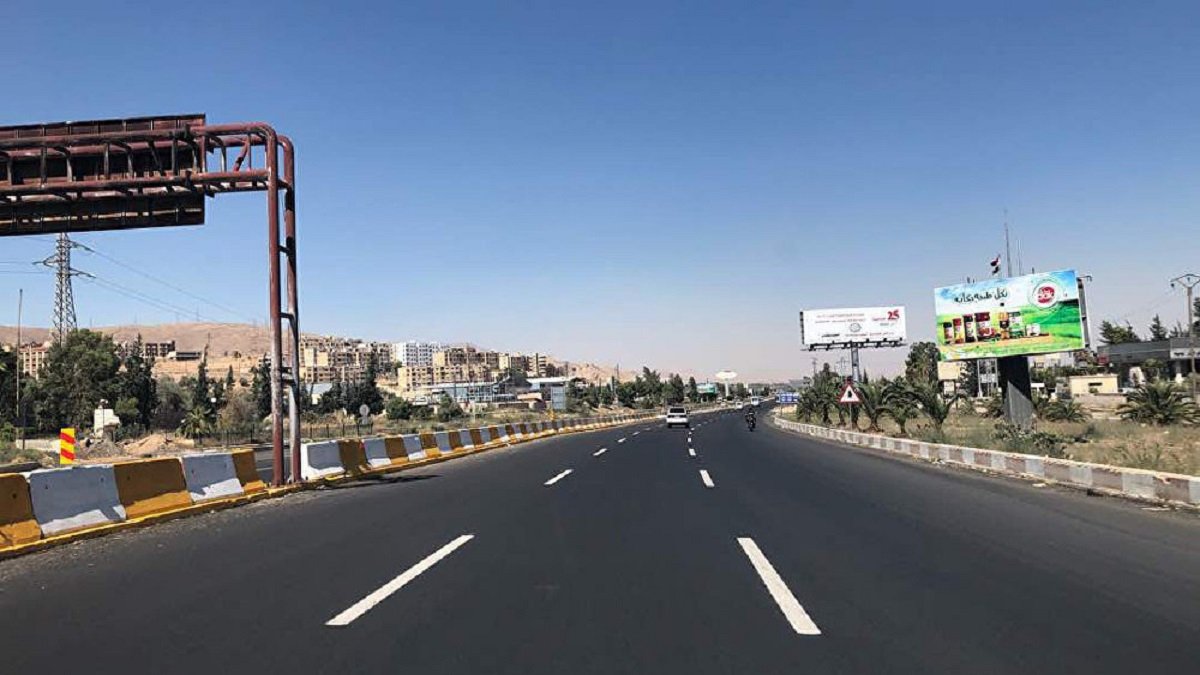
Nationwide Road Program
The director general of the General Corporation for Road Transport, Moaz Najjar, unveiled on 1 July 2026 a plan to carry out five of the largest international road rehabilitation projects in Syria. The program is designed to reconnect the country's provinces and to revive transport and commercial exchange after years of disruption.
Officials described the effort as a coordinated program rather than a set of isolated repairs, with a defined completion schedule attached to each route.
Corridors From Nasib to the East
The projects extend from the Nasib crossing on the Jordanian border eastward to Deir ez-Zor. Taken together, the corridors cover the main arteries linking the south, the center around Homs, the north through Aleppo and Idlib, and the eastern region of the country.
The plan groups these routes into a single rehabilitation drive intended to restore continuous overland movement across the national road network.
Timelines by Segment
The Nasib–Damascus project requires about 400 days to complete, or just over a year. The Damascus–Homs and Homs–Aleppo projects, along with the Saraqib–Idlib link, each need roughly 500 days.
The Damascus–Palmyra and Palmyra–Deir ez-Zor segments are the longest, each expected to take about 900 days, or close to two and a half years, within the wider plan to rehabilitate the international road network.
Costs Await Tenders
The total cost of the projects has not yet been set, as the program remains in the bid-solicitation phase. Companies are to submit technical and financial offers, after which an implementing contractor will be selected for each route.
Until that competition concludes, no figure has been placed on the overall investment required to deliver the six named segments.
Reviving Trade Arteries
Officials say the importance of the work goes beyond rehabilitation, seeking to reactivate the country's principal economic corridors. Before 2011 these routes formed a main artery for trade, transport, and transit inside Syria and with neighboring states, and the program aims to return them to that role.