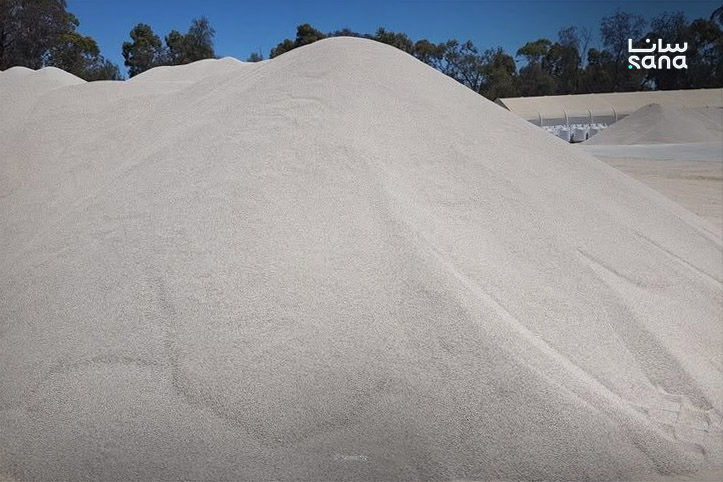
Silica Sand Opened to Investors
Syria's General Institution for Geology and Mineral Wealth has adopted a plan to update its geological surveys and open the country's silica sand deposits to investment. Announced on 30 July 2026, the plan aims to raise local production, expand exports, attract capital, and create jobs from a mineral that has so far been little exploited. Updated surveys are meant to give investors a clearer picture of what lies underground before they commit.
Reserves and Prices
The institution puts national silica sand reserves at tens of millions of tons. Raw sand is priced from $15 per ton, while processed material sells for between $65 and $100 per ton, several times the value of the untreated mineral.
That gap between raw and refined prices is the incentive authorities are counting on to draw firms willing to process the mineral inside Syria rather than ship it out untreated, capturing more of its value at home.
Deals for Solar and Chips
Two memoranda of understanding have been signed. One is with a Saudi company to produce microsilica, a fine material used to strengthen concrete; the other is with a firm named Syria Silicon to supply high-purity silica for solar panels and electronic chips. Both agreements point toward higher-value manufacturing rather than the export of raw sand alone.
Where the Sand Is
Deposits are concentrated in Rural Damascus, Homs, and Deir ez-Zor. Extraction is already under way at the Al-Quraytain site in Homs, giving the plan a base of existing operations to build on.
Jobs and Foreign Capital
The institution's deputy director general, Ammar al-Nasser, tied the plan to attracting investment and generating employment. If the processing agreements move ahead, they would channel foreign capital into domestic mineral processing rather than the sale of untreated sand, and add manufacturing activity around the extraction sites.