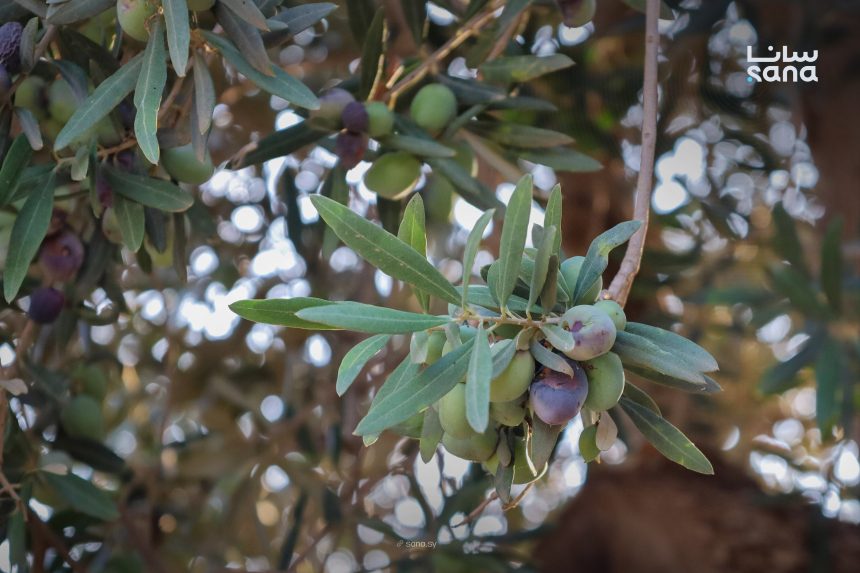
Harvest Estimate Released
Syria's current olive season is projected to yield about 954,730 tons of olive fruit and roughly 190,946 tons of olive oil, according to production estimates published on 25 September 2026. The projection covers the nationwide crop across the country's principal growing regions and draws on surveys of cultivated area and tree counts.
Of the expected fruit, roughly 20% is earmarked for table olives and 80% for pressing into oil. The average oil-extraction rate is put at 25%, meaning about a quarter of the weight of pressed olives is recovered as oil.
Output More Than Doubles
The projected harvest marks a sharp rebound from the previous season, when olive-fruit production came in at about 412,000 tons and olive oil at roughly 66,000 tons. This season's estimate is more than twice the fruit volume and nearly three times the oil output recorded a year earlier, spanning both fruit destined for the table and olives set aside for pressing.
A Household Staple
Olive oil is a dietary mainstay in Syrian kitchens and a significant source of income for rural families. A larger crop generally eases pressure on domestic cooking-oil supplies and can moderate retail prices, while leaving more available for the wider market.
Table olives, which account for about a fifth of the crop, are another staple of the household pantry and a source of seasonal labor during harvesting and processing.
Where the Trees Stand
Olive cultivation spans about 677,725 hectares nationwide, with an estimated 101.5 million trees, of which roughly 90.7 million are productive. Aleppo leads with about 190,420 hectares, followed by Idlib at 118,577 hectares and Homs at 96,077 hectares.
Tartus, Hama and Latakia round out the largest growing areas, at about 75,685, 71,454 and 48,648 hectares respectively, underscoring the crop's concentration in the north and along the coast.
Costs Weigh on Growers
Rising fuel costs, higher labor wages and transportation expenses were cited as the main pressures on the sector this season. These costs bear on harvesting and pressing operations and can feed into the final price of oil reaching consumers, tempering the benefit of a larger crop.