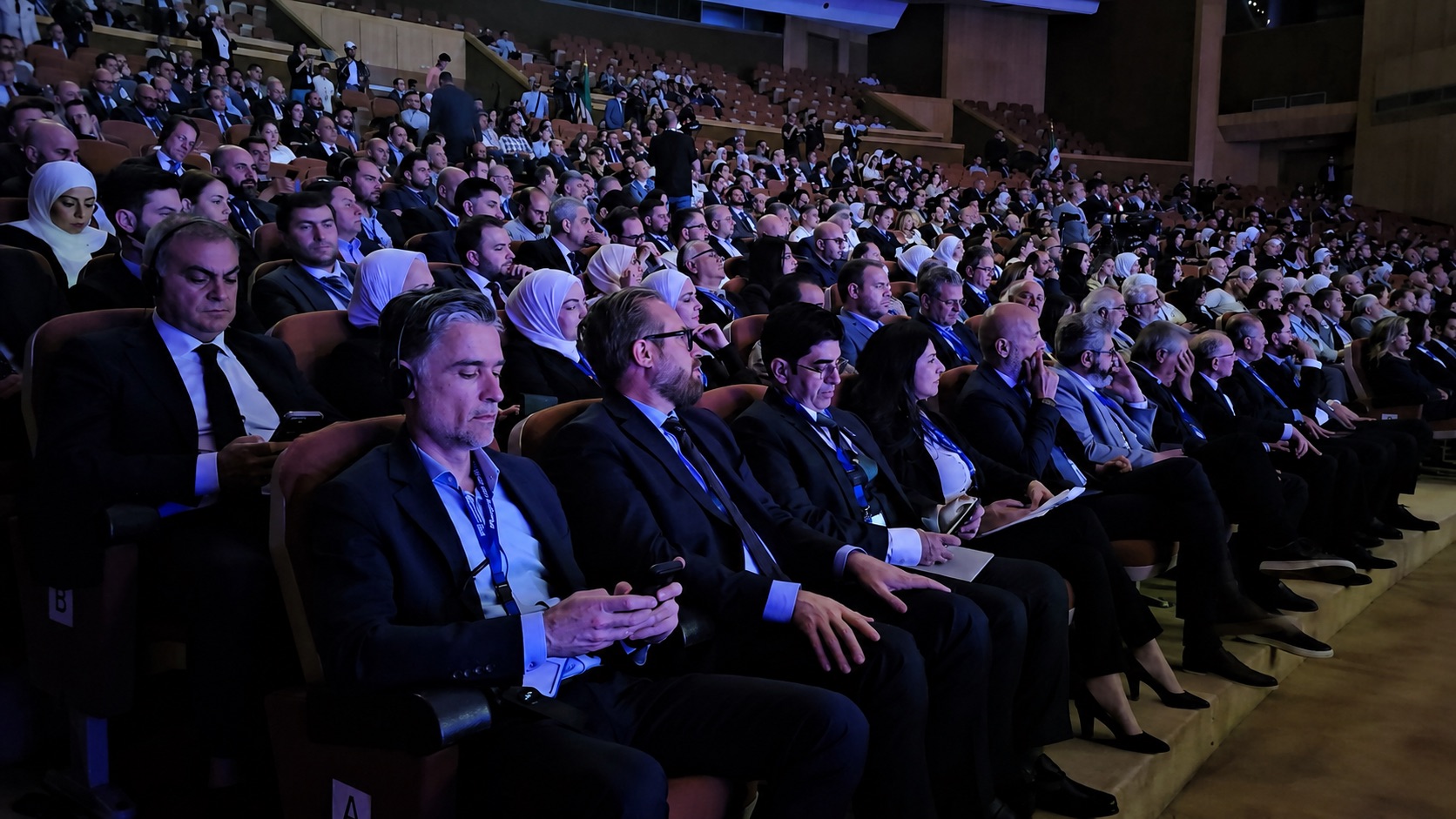
Forum Ends in Confrontation
A three-day national dialogue between the Syrian government and the private sector closed on 3 June 2026 at the Palace of Conferences in Damascus. The final session was interrupted when an industrialist from Hama, whose family assets were seized decades ago, confronted ministers on stage over the slow return of nationalized property.
The finance minister left the platform during the closing statement to meet the protester at the hall's entrance, where the two spoke before shaking hands.
Minister's Restitution Figures
The finance minister said the state had lifted precautionary seizures on the movable and immovable assets of 70,000 citizens, and had returned 20,000 properties — buildings, factories and residential apartments — to their owners.
He said a government committee on confiscations was now handling the issue and pledged that the wider nationalization file would eventually be opened, calling the seizure of private property contrary to law.
Industrialists' Demands
Affected owners organized themselves during the forum under a committee for those harmed by nationalization, distributing a statement to participants across the three days. They argued that the nationalization decrees are legally void and that confiscated factories and companies must be returned before their owners will reinvest.
The committee said thousands of founding industrialists, especially in the textile sector, are waiting for decrees that restore their seized holdings so they can re-enter the economy, expand employment and lift exports.
Roots of the Seizures
The nationalization law of 1961 targeted private banks and factories. By the committee's historical account, 23 institutions worth a combined 200 million Syrian pounds (SYP) — about $90 million at the time — were confiscated, with the banks among them valued at some $27 million.
Successive waves in 1964 and 1965 disabled more than 80 percent of the country's companies, leaving many plants idle or destroyed in the decades that followed.
Why It Matters
Property restitution sits at the center of efforts to draw domestic industrialists back into a battered economy, and the dispute exposed tension over whether returning Syrians or foreign investors will lead reconstruction. The finance minister insisted "Syria is for its people," a message the protesting owners said they had yet to see reflected on the ground.