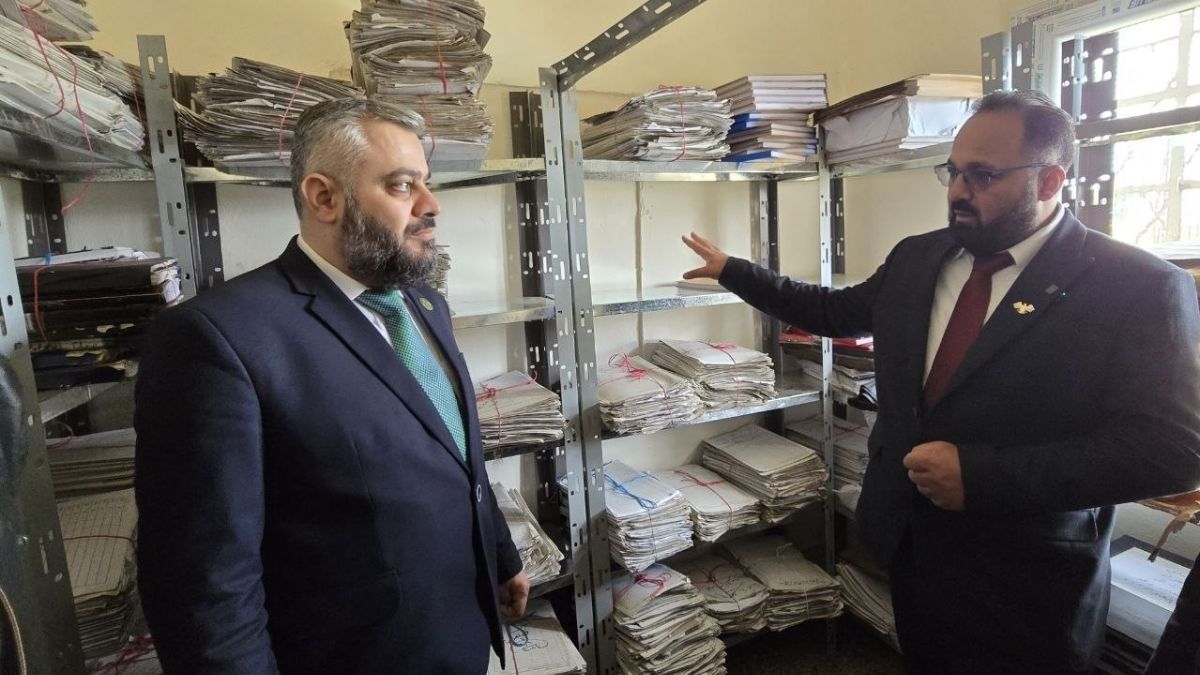
Ministry Adopts Digital Service
Syria's Ministry of Justice issued a circular on Wednesday 13 May 2026 recognizing electronic notification as an official channel that carries the same legal force as the traditional in-person service of court papers. Parties to a case must accept the channel on a designated form, which becomes a permanent part of the case file.
Judges and heads of court departments have been instructed not to register any new case until the form is completed, with both plaintiffs and defendants required to declare a chosen address for service within the court's jurisdiction.
What Litigants Must Provide
The form requires a working phone number for SMS messages, a social-messaging account such as WhatsApp, and an email address where available. Each filing party must select at least one of these channels for service of process and accept that supplying the data is binding consent to electronic notification.
Defendants are required to submit their own form at their first appearance before the court or department, and any party may later update their listed electronic addresses to reflect current contact details.
Legal Effect Equal to In-Person Service
Under the circular, an electronic notification produces the same legal effect as personal service and bars any later claim of having been unaware of the proceedings. The time and date of dispatch govern in cases where delivery fails because of incorrect or incomplete information supplied by the recipient.
Statutory distance allowances will be respected for parties who prove through official documentation that they were outside the country at the moment the notification was dispatched.
Backed by Cassation Court Ruling
The measure follows a 3 May 2026 decision by the seven-judge General Assembly of Syria's Court of Cassation, which made an electronic address mandatory for all parties and their lawyers across litigation. The Court cited persistent delays caused by traditional service methods.
The ruling also obliges plaintiffs to give a detailed address for defendants at the filing stage and sign a declaration of responsibility for its accuracy, with judges barred from registering claims that omit this attestation.
Implementation Timeline
The circular took effect on the day of issuance, with executive instructions to follow. The Ministry's Directorate of Technology and Digital Transformation has been charged with building the digital infrastructure required to operate the system, and any violation is to be reported to the Ministry.
The procedure applies to civil claims as well as criminal misdemeanor and felony cases, subject to the specific provisions of the Code of Criminal Procedure.