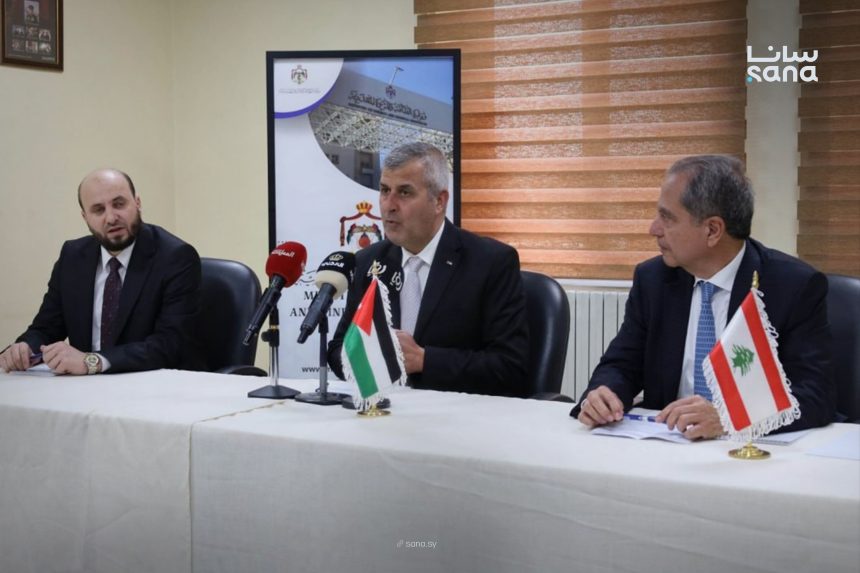
Damascus, Amman, Beirut Align on Energy
Syrian Energy Minister Muhammad al-Bashir, his Jordanian counterpart Saleh al-Kharabsheh, and Lebanese Energy and Water Minister Joseph Sadi met in Amman on 4 May 2026 to formalize a three-way framework for gas supply and electricity interconnection. The ministers said feasibility studies and contract execution had been completed in the preceding weeks, paving the way for binding deliveries.
The package covers gas flows through the rehabilitated Arab Gas Pipeline, four electricity transmission lines tied into Lebanon, and a 400-kilovolt link with Jordan.
Pipeline Volumes and Pricing
The Syrian Petroleum Company and Jordan's National Electricity Company signed a parallel supply contract sized at roughly 4 million cubic meters of gas per day, equivalent to 140 million cubic feet. The annual export value is put at about US$800 million (USD).
Deliveries began on 1 January 2026 at a daily range of 30 to 90 million cubic feet, routed via Aqaba port and the Egyptian-leased regasification vessel Energos Force, with quantities ramping up through March.
Lebanon's Electricity Lifeline
Al-Bashir told reporters that four cross-border transmission lines between Syria and Lebanon are operational, and that progress continues on transporting gas to Lebanese power stations through Syrian territory. Sadi said the priority is securing reliable, cost-effective electricity for Lebanese consumers.
Where the Gas Comes From
Energy Ministry media director Abdel-Hamid Salat acknowledged that the gas is not Jordanian: it lands at Aqaba as liquefied natural gas, is regasified, and then pumped onward. Initial cargoes were sourced from Egypt; later cargoes may come from elsewhere. Salat emphasized that the Syrian government bears the full purchase cost rather than relying on grants.
A separate March 2026 panel in Washington featured a researcher who claimed the actual molecules are Israeli rather than Jordanian. The Syrian energy ministry's stated position remains that the gas arrives via Jordan rather than originating from there.
From 2001 Plans to 2026 Activation
Regional electricity interconnection between Jordan and Syria dates to 2001 and was suspended in 2012. A renewed set of agreements signed in 2022 aimed to revive electricity and gas flows through Syrian territory but stalled on financing. Monday's package puts the corridor on a fully Syrian-funded contract rather than the grant-dependent arrangements of previous attempts.