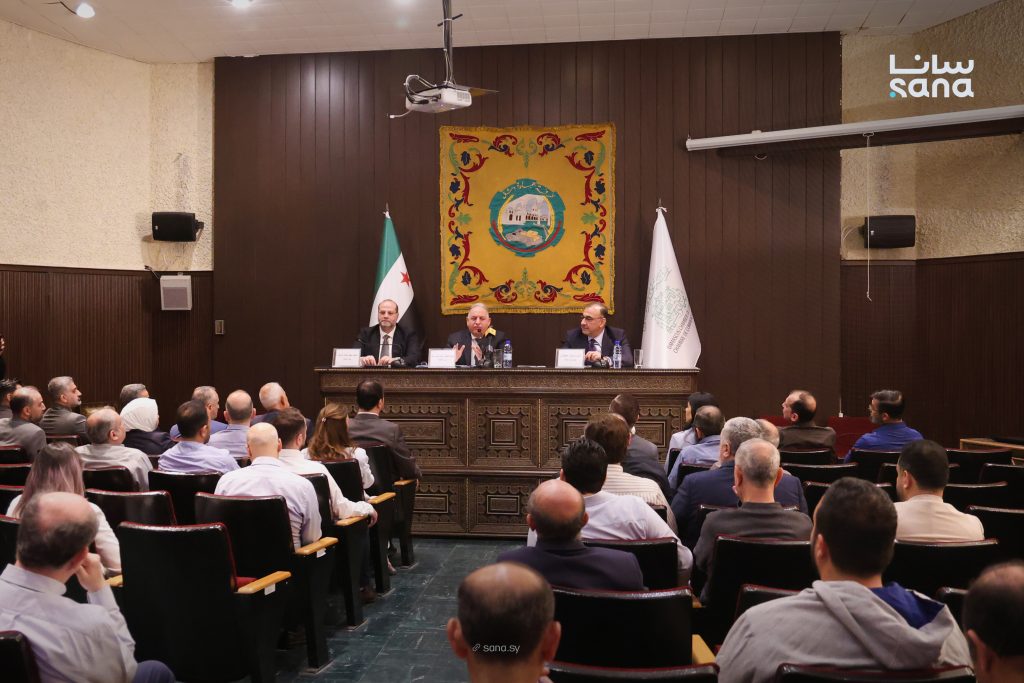
Minister Outlines Tax Overhaul
Syria's finance minister, Muhammad Yasir Barnieh, set out a package of tax changes during a meeting with traders in Damascus on 21 May 2026. He said the government is preparing new legislation built around a unified income tax law and a revised sales tax system, framed as an effort to simplify procedures and widen tax fairness.
Under the plan, every citizen whose annual income falls below 640,000 new Syrian pounds (SYP) would be exempt from income tax, while the tax on the business sector would not exceed a ceiling of 15 percent.
Consumption Fee Takes Effect in June
A seminar at the Damascus Chamber of Commerce, held the same day, addressed the consumption spending fee and the import tax advance in more detail. The minister said the consumption fee is not a new measure but a law dating from 2015 that was never fully applied, and that it will take effect from the start of June 2026.
Fees from the earlier grace period, which ran for several months, will not be collected. The decree is due to remain in force until the end of 2026, after which a sales tax is intended to replace it.
Advance Levy and the Golden List
On 24 March 2026 the ministry, working with the customs authority, ordered importers to pay an advance tax equal to 2 percent of invoice value and to obtain a prior financial clearance certificate. The minister described the advance as an existing mechanism, a prepayment of tax already owed, and said the advance schedules have been revised by type of goods and sector.
To reward compliant businesses, the ministry is preparing a Golden List that would exempt trusted traders and industrialists from advance payments and certain procedures, a step aimed at curbing so-called fictitious importers.
Licenses and Corruption Cases
Barnieh said the ministry has already acted against employees implicated in financial and administrative violations, suspending a number of staff, and is reviewing about 700 names proposed for license revocation. He said enforcement would extend to traders and businesspeople, not only government workers.
Support for Damaged Industry
The minister also announced tax exemptions of up to 100 percent for four years for industrial facilities damaged in the conflict, a measure intended to help restart factories and revive local production. He said new credit facilities would address non-performing loans so business owners can resume activity.
He added that the ministry is accelerating a digital transformation of financial transactions to reduce direct contact between officials and taxpayers, and called on traders to submit accurate invoices and pay the tax due.