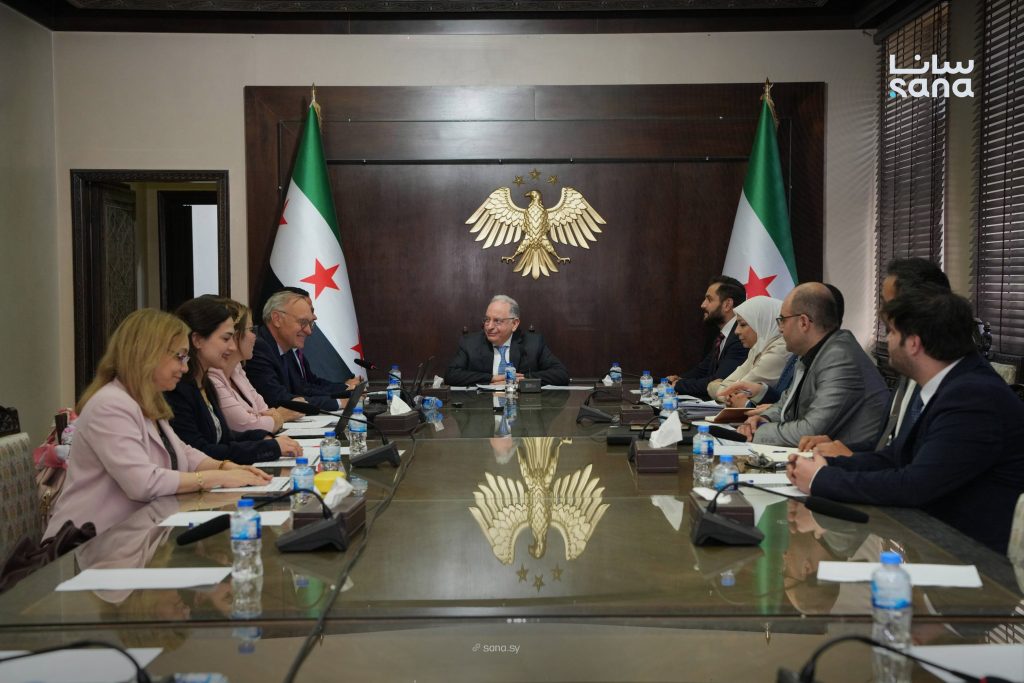
IMF Mission Wraps Up in Damascus
Syria's finance minister, Mohammad Yasser Barnieh, met an International Monetary Fund mission on 24 September 2026 as the delegation concluded its visit to the country. The meeting reviewed the preliminary report of the fund's technical assistance on government finance statistics.
The discussions covered the outcomes of the consultations and the mission's initial findings, measured against the Government Finance Statistics Manual (GFSM), the international standard for compiling public finance data.
Aligning the National Accounts
Officials reviewed the work of matching the state's budget operations — expenditures, revenues, and financing — to the manual's requirements and linking them to the chart of accounts.
The two sides also prepared a draft roadmap intended to bring Syrian government finance statistics into compliance with the manual's international requirements.
Tax Authority Takes Up Recommendations
On the same day, the board of the General Authority for Taxes and Fees, chaired by the finance minister, discussed the fund's latest recommendations. These addressed tax disclosure, strengthening voluntary compliance, and coordination with the anti-money-laundering body.
The recommendations also called for reviewing the investment law in force and the tax incentives it contains, reconsidering them in light of the new tax system.
Rebuilding Fiscal Machinery
The board examined a plan to reopen and reactivate finance directorates in areas affected by the war, a step meant to ease burdens on taxpayers. It agreed on the need for a joint committee, drawn from the finance ministry and the tax authority, to re-study local administration fees and make them fairer.
Members also reviewed progress on completing costs for 2025 and earlier, an amendment to the tax-evasion law, and the criteria defining the large-taxpayer segment. A separate joint committee, recently formed with the customs and border authority, is exchanging technical information between the two bodies.
A Widening Reform Track
The engagement builds on an earlier visit: in August, the finance minister met a fund mission specialized in tax policy at the close of its trip, discussing draft tax laws under preparation to match the priorities of economic reform. The board separately reviewed a hiring plan and a training program for new staff.