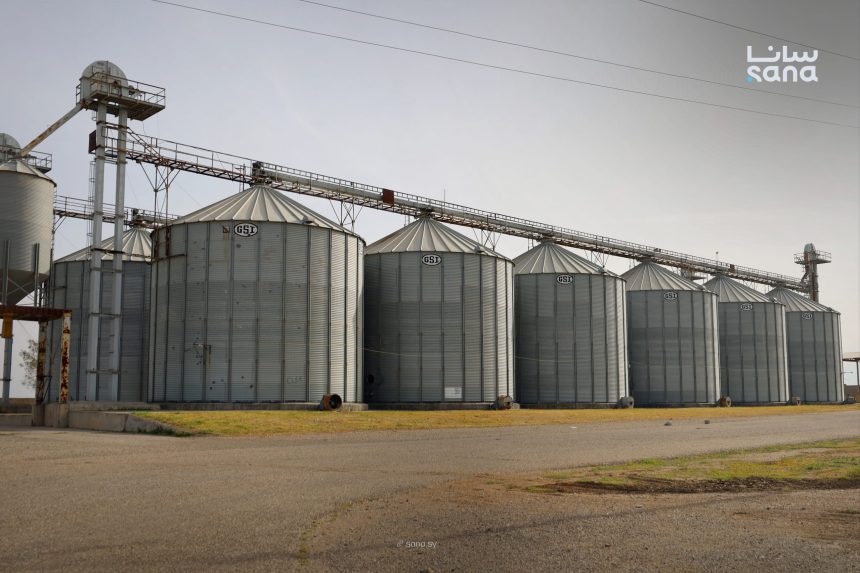
Construction Begins at Seven Sites
The Syrian Grain Establishment has started building metal grain silos at seven locations, with work beginning on 18 October 2026 at the grain centers in Saraqib and Khan Sheikhoun. The remaining sites are to be developed in parallel, according to the establishment's director of construction projects.
The project was awarded to a single engineering contractor, which has taken over all seven sites to install the new storage units. The announcement was carried on the establishment's own communication channel.
Closing a One-Million-Ton Gap
The new silos are expected to add roughly 700,000 tons of storage capacity, and the establishment is targeting total capacity of about 2.5 million tons for the 2027 season.
The need is stark. Last season the country received about 2.7 million tons of wheat, while storage capacity stood at only about 1.2 million tons. The shortfall forced more than one million tons to be stored in the open, a practice that carried extra costs and left grain exposed to weather and spoilage.
Work Across Five Governorates
The seven sites span five governorates: Al-Safh in Hasakah, Sabkha in Raqqa, Al-Mayadin in Deir ez-Zor, Bardah in Aleppo, and Tal al-Tawqan, Saraqib and Khan Sheikhoun in Idlib.
Placing storage close to production and collection areas is intended to reduce the handling and transport losses that accompany open-air storage, and to spread capacity across the country's main grain-growing regions.
A Larger Phase Ahead
A separate tender covering metal silos at 15 additional sites is set to close on 4 November 2026, with construction expected to begin in early December 2026.
Together, the two phases point to a sustained effort to expand the country's grain storage network before the next harvest cycle rather than a one-off addition.
Preparing for the 2027 Harvest
By raising covered storage capacity ahead of the 2027 wheat season, the plan aims to protect a larger share of the strategic crop from the losses recorded when grain is left outdoors.
Wheat remains central to the country's food supply, and the ability to store it safely bears directly on bread supplies and on how much the state must spend to manage the crop.