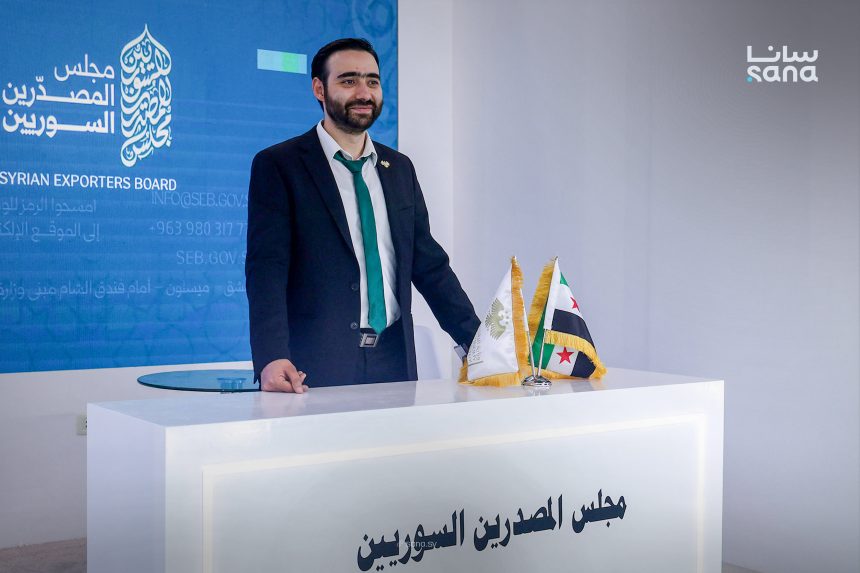
A New Export Body
Syria unveiled a national Council of Exporters during the 63rd Damascus International Fair, presenting it as the country's central platform for organizing and expanding foreign trade. The council was created by a decision of the Ministry of Economy and Industry issued on 27 August 2026, which named its first board of directors.
The board is chaired by Abdul Qader Muhammad Tahan and brings together nine members, including two deputies, two secretaries, and representatives drawn from across the export economy.
Reaching 90 Markets
Officials said the body is designed to carry Syrian goods to more than 90 countries and markets worldwide. Those destinations are grouped into five main commercial zones: the Gulf states, Europe, Iraq, Turkey, and Africa.
The stated goal is to move exporting away from scattered individual effort and toward a coordinated national system linking producers, exporters, service providers, and specialists.
A Digital Gateway
Central to the plan is a digital platform that will issue electronic certificates of origin and maintain searchable databases of registered exporters and importers. The tools are intended to cut paperwork and speed cross-border shipments.
The council describes the platform as the backbone of a single system meant to connect producers, exporters, and specialists rather than leaving each firm to navigate export rules on its own.
Services for Exporters
The council will offer consultancy and legal, commercial, financial, and logistics support, alongside feasibility studies and market analysis for firms seeking new buyers abroad.
It also plans capacity-building programs, international training, professional certifications, trade missions, marketing campaigns, and support for taking part in overseas exhibitions.
Six Sectors Represented
Seats on the board reflect six export sectors: textiles, food products, logistics services, chemicals, agriculture, and handicrafts, together with the wider trade sector and ministry officials.
Backers frame the structure as an attempt to give each sector a direct voice in shaping the rules and services that govern how Syrian products reach global buyers.