Decree 68 Takes Effect
Executive instructions implementing Presidential Decree No. 68 of 2026 began rolling out on 21 May 2026, raising base salaries and allowances for state employees in healthcare, higher education, and oversight bodies. The Syrian Ministry of Finance issued the instructions formalizing the increase mechanism by sector and rank.
The decree, signed by President Ahmad al-Sharaa, frames the adjustment as a qualitative increase rather than a flat raise, tying gains to job category and professional precision requirements.
Sectors and Coverage
The increase covers three priority pillars: oversight and inspection, healthcare, and higher education. A joint statement from the Ministry of Finance and the Ministry of Health, issued on 23 May 2026, framed the raise as "invest[ing] in healthcare personnel as a fundamental approach to developing comprehensive healthcare and safeguarding community health security."
Hisham al-Khatib, public relations director at the Central Authority for Supervision and Inspection, said the raises target positions "requiring high levels of precision, integrity, and impartiality."
Voices from Government Hospitals
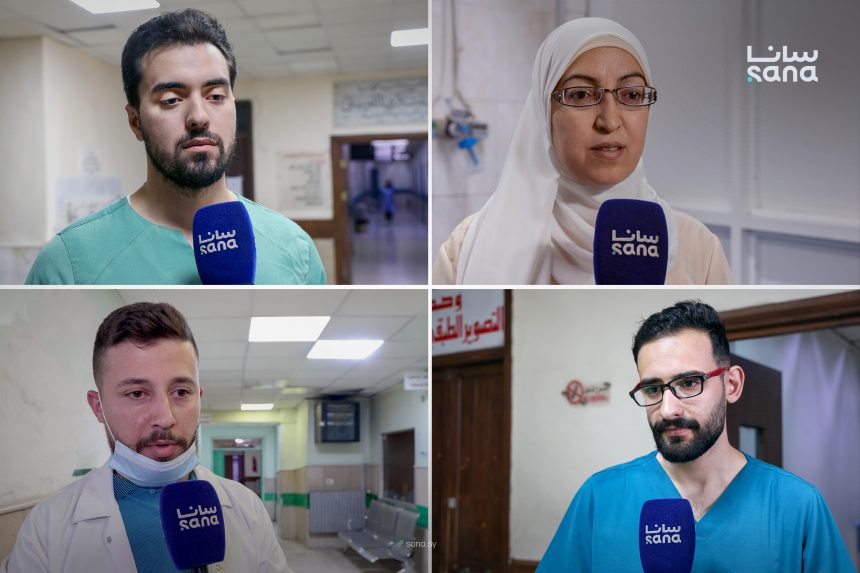
Wafa Bakour, head of nursing at Damascus's Ibn al-Nafis Hospital, reported improved income and stronger motivation among nursing staff. Dr. Kinan Tamim, an orthopedic surgery resident, said the increase reflects state appreciation and helps prevent medical brain drain abroad.
Dr. Hasan Samodi, another orthopedic resident, called the adjustment "a positive step" while noting that "further improvements are needed for shift work compensation."
Higher Education and Beyond
The raise extends to faculty at state universities, where banking and economics lecturer Abdullah Qazzaz of Damascus University said the move would "positively influence university education quality and educational services" by strengthening research capacity.
Officials framed the salary policy as part of a broader effort to retain qualified cadres in government work and reduce departures to the private sector and overseas employment.
Open Questions
Officials have not publicly disclosed the percentage of the increase or its full fiscal cost. Ahmad al-Saud, a second-tier nurse, urged narrower wage gaps between university-trained and second-tier nursing categories, signaling that calibration debates will continue as implementation proceeds.