2.5 Million Tons in Reach
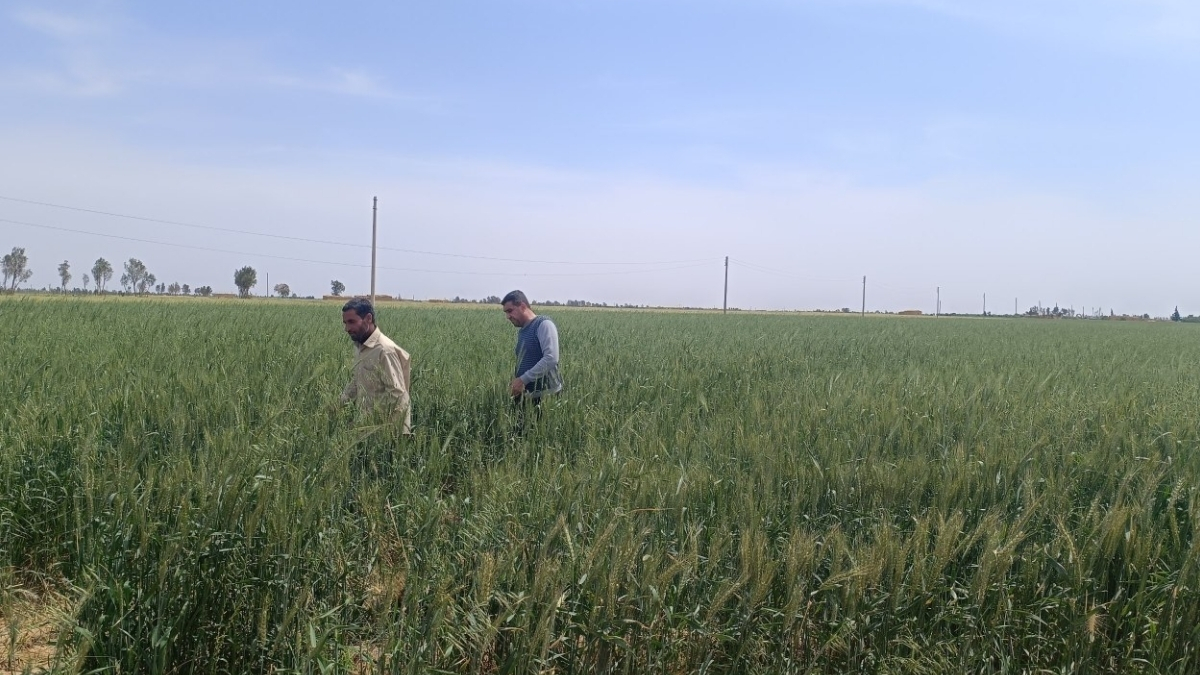
Syria is on track for a wheat harvest of 2.3 to 2.5 million tons in the 2026 season, the Ministry of Agriculture's planning office estimates. The figure falls below the 2.8 million ton target written into this year's official cultivation plan but marks a meaningful recovery from last season's depressed yield.
Said Ibrahim, director of agricultural planning and statistics at the ministry, said improved rainfall and a wider planted area underpin the projection.
Plan Execution Lags Targets
Of 1.4 million hectares planned for wheat this season, 1.268 million were ultimately planted — an execution rate of 86 percent. Rainfed acreage was the better performer at 763,000 hectares against plan (92 percent), while irrigated acreage reached 505,000 hectares (79 percent).
Productivity assumptions are 3.5 tons per hectare on irrigated land and 1.75 tons per hectare on rainfed land.
Northeast Carries the Crop
More than 55 percent of cultivated wheat sits in northeastern Syria, where roughly 1.6 million tons of this season's output is expected. The region's outsized weight makes the integrity of storage, transport, and procurement infrastructure across Hasaka, Raqqa, and Deir ez-Zor decisive for the national result.
Reserves and the Import Bill
Hassan al-Othman, general director of the Syrian Grain Corporation, put current strategic stocks at roughly one million tons — enough to cover five to six months of consumption. National annual requirement is estimated at between 2.5 and 4 million tons depending on the assumption used.
Bridging that gap with imports would carry a sizable foreign-exchange cost: covering 2.5 million tons of imported wheat at recent global benchmark prices of 210 to 230 US dollars (USD) per ton would exceed 562 million USD.
What Is at Stake
A harvest in the projected range would narrow the import gap, ease pressure on the budget, and reduce the volume of wheat that has to be paid for in hard currency. A shortfall would push the country deeper into the import market at a time when global wheat futures sit near the upper end of recent ranges.