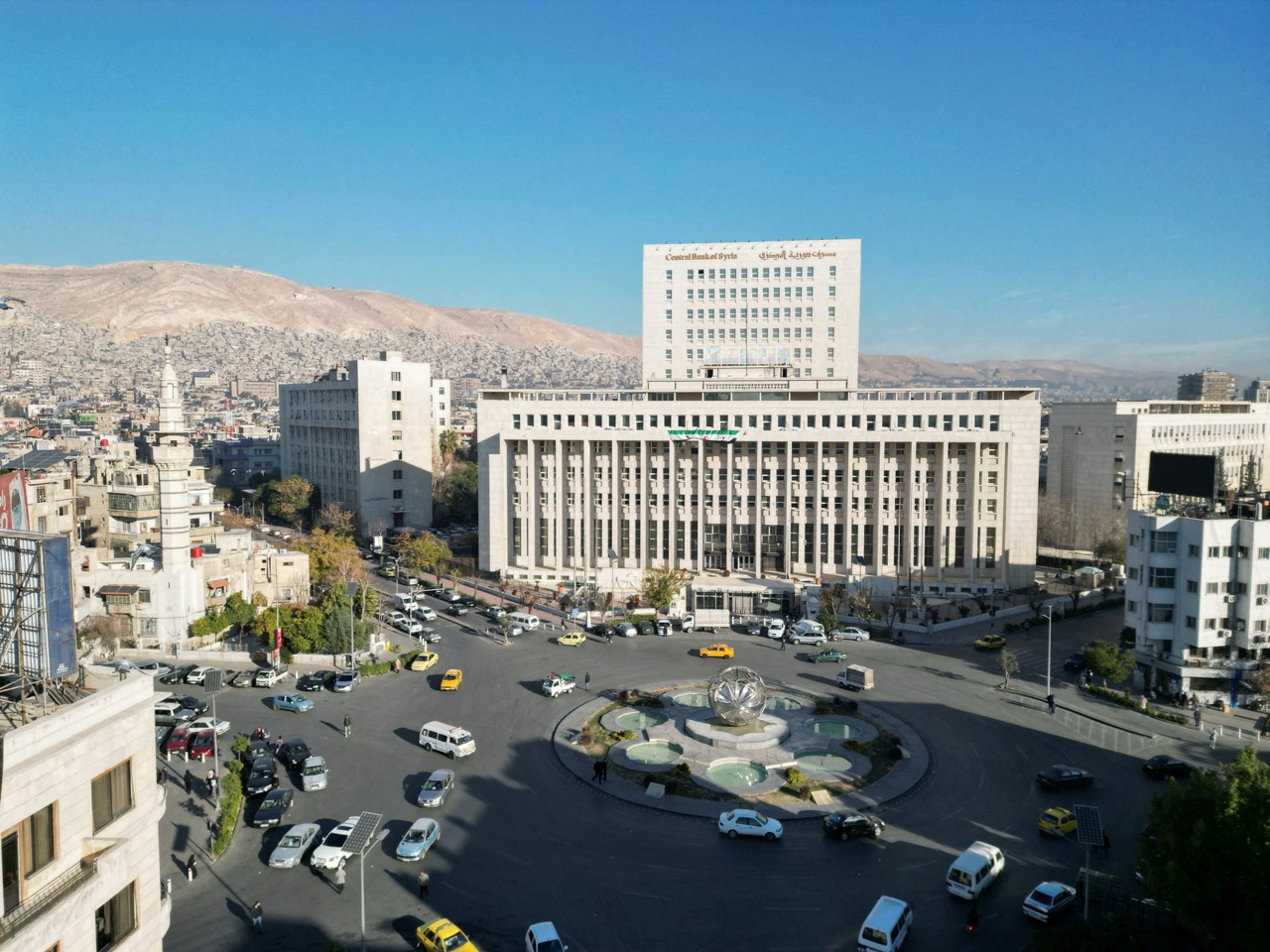
A new decision was issued on Friday, May 15 appointing Safwat Raslan, Director General of the Syrian Development Fund, as the new Governor of the Central Bank of Syria, succeeding Abdul Qader Hasriyah, who was appointed Syria’s ambassador to Canada, according to Reuters, citing state media.
This change represents an important shift in the management of one of Syria’s most sensitive economic files. It comes at a time when Damascus is seeking to reorganize its financial institutions, strengthen its external banking presence, and create an environment better able to meet the requirements of economic openness and reconstruction.
Raslan’s appointment carries particular significance given his previous position at the Syrian Development Fund, which may reflect a move toward linking monetary and financial policy with development and project financing, especially amid the need for more effective tools to support economic recovery and regulate the relationship between banks and the productive sector.
As for Hasriyah’s appointment as ambassador to Canada, it also carries a noteworthy implication, as it transfers a banking figure who held a sensitive role in managing monetary policy to an important diplomatic arena. This may indicate Syria’s desire to employ financial expertise within the process of rebuilding foreign relations, particularly with countries that could play a role in sanctions, remittances, investments, and renewed economic engagement.
During the previous phase, Hasriyah’s name was associated with several prominent financial files, including efforts to reconnect the Syrian banking sector with international channels and enhance the presence of Syrian banks in external transactions. These files will now pass to Raslan, who will face an early test in his ability to maintain monetary stability, develop the tools of the Central Bank, and build domestic and external confidence in Syria’s financial sector.
The challenge facing the new governor is not limited to managing the exchange rate or controlling liquidity. It also extends to broader issues, such as modernizing banking operations, strengthening transparency, improving compliance with international standards, and facilitating the movement of remittances and investments through official channels. The success of any monetary policy in the coming phase will depend largely on the Central Bank’s ability to combine stability with openness, and to protect the currency while stimulating economic activity.
Thus, the decision does not appear to be merely a change of names, but rather a step within a broader redistribution of roles between financial management and economic diplomacy. Raslan is moving into a position that requires careful management of monetary confidence, while Hasriyah is moving to an external post where he can employ his banking experience to support Syria’s economic engagement with the outside world.
In conclusion, this change places the Central Bank of Syria before a new phase, whose main focus is not only controlling monetary policy, but also turning potential financial openness into practical results felt by the Syrian economy, through banks that are more capable of operating, more regular remittances, and a financial environment marked by greater trust and stability.