$500 Million Fair Deal
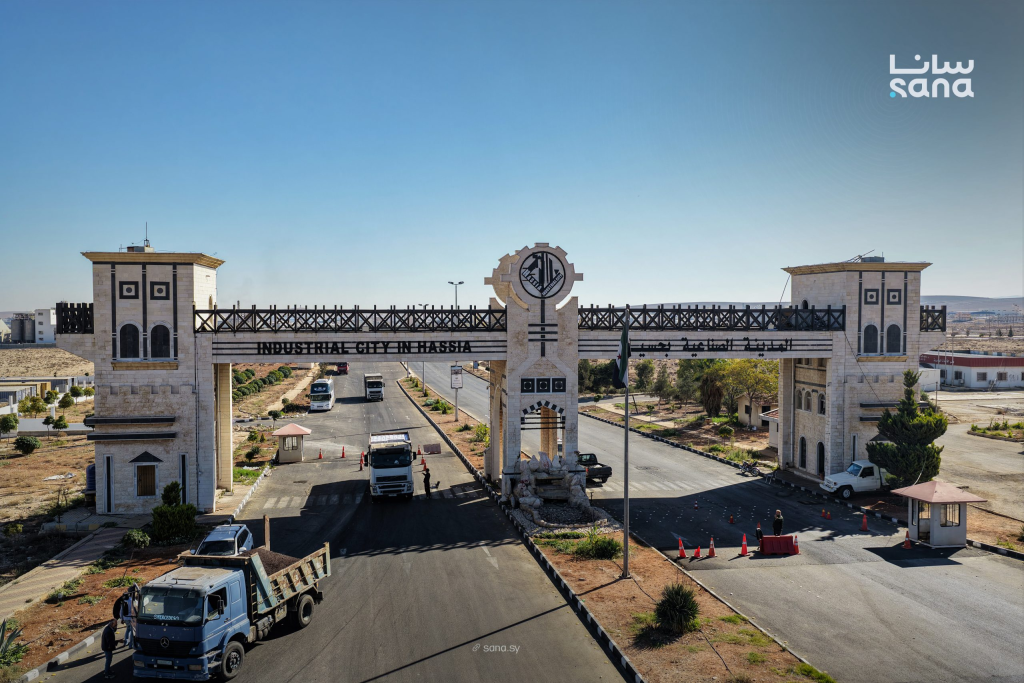
Five new industrial projects with an estimated value of $500 million (USD) were agreed for the Hasya Industrial City in Homs governorate, described on 7 September 2026 as the largest single agreement reached at the 63rd session of the Damascus International Fair.
The projects will be built across roughly 500 dunums inside the industrial city and are designed to operate as one interconnected industrial system rather than as separate plants, with the stated aim of boosting local production for the construction and infrastructure sectors.
Five Industrial Plants
The package covers an iron mill, a ceramics factory, a building-materials plant, an asphalt facility and a stone quarry. Together they target inputs used heavily in construction and rebuilding work.
Grouping these lines in a single zone is intended to shorten supply chains, with raw materials extracted, processed and turned into finished products close to where they are used.
Local and Chinese Partners
The venture is to be carried out through coordination between the White Room Holding group, represented by a company named Ases, the Chinese firm Zuhong, and the administration of the Hasya Industrial City.
The Ministry of Economy and Industry said the projects form an integrated industrial system meant to move the investments from the agreement stage to actual implementation on the ground.
Hasya's Industrial Base
The industrial city already hosts 433 operating facilities across more than 326 hectares and provides an estimated 10,500 jobs, making it one of the country's principal industrial hubs.
Analysts tracking the deal say the mix of quarrying, extraction and manufacturing could absorb local workers across a range of industrial and technical specializations.
Reconstruction Supply Chain
Producing raw materials domestically is expected to cut transport and import links and could gradually feed through to the cost and availability of building materials in the local market.
Economic observers stress that the foreign component of the deal carries weight only if it brings technology transfer, technical training for local staff, and equipment and financing alongside the capital.