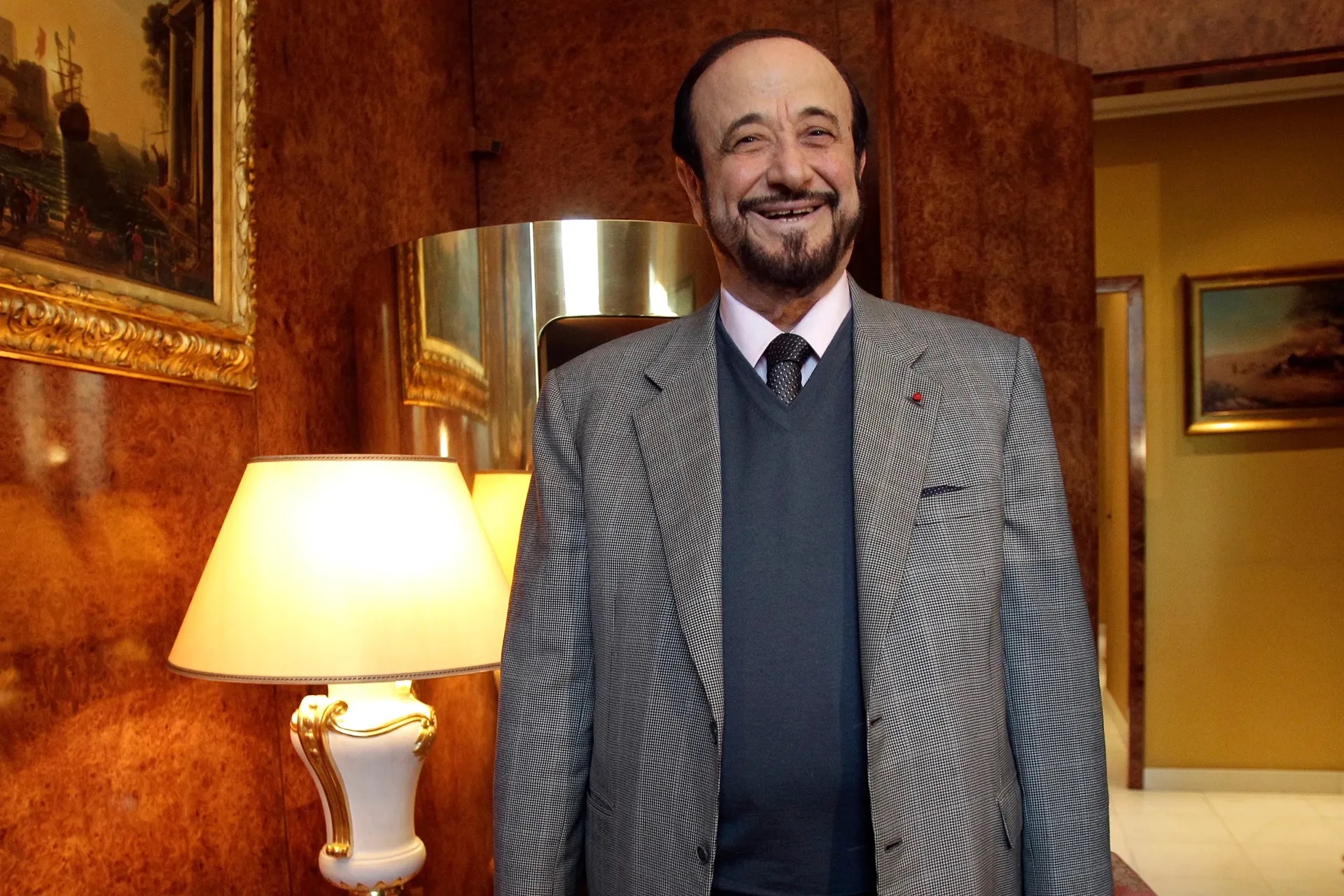
A Le Monde investigation published on 19 November 2026 has revealed that financial transfers linked to Rifaat al-Assad, uncle of ousted Syrian president Bashar al-Assad and Syria's former vice-president, passed through Germany's Deutsche Bank to the tune of about €77.2 million, spread across 7,944 transactions between May 2013 and July 2020. The investigation, by journalist Anne Michel, is part of a vast international project called "Inside Deutsche Bank", based on the largest leak of internal documents ever to come out of a bank.
A precise figure from inside the bank
The figure is not a press estimate. It comes from an internal Deutsche Bank document dated 25 November 2021, which puts the exact value of the transactions linked to Rifaat al-Assad at €77,206,411. The transactions span roughly seven years, meaning they continued long after his fortune became the subject of public judicial investigations in France in 2013.
According to coverage of the investigation, a large share of these transfers could have been flagged from the outset, raising serious questions about the effectiveness of anti-money-laundering controls at one of Europe's largest banks.
A cross-border network of companies
The leaked records show companies and entities linked to the Assad family in Luxembourg, Gibraltar and Panama, used to move millions of euros through complex financial structures that concealed the origin of the funds and shifted them across borders. Among them, the investigation names a Spanish company, Triarina, managed by the father of Rifaat al-Assad's third wife.
According to the data, around €5.9 million of these flows went directly into bank accounts belonging to members of his family.
Le Monde notes that revelations about the family's foreign wealth are not entirely new: the 2016 Panama Papers had already exposed offshore companies linked to it. The new leak, however, offers for the first time a detailed picture of how the money moved inside the banking system.
From Syrian public funds to luxury real estate
The investigation ties Rifaat al-Assad's fortune to large-scale embezzlement of Syrian public funds and traces how the money was invested in luxury property in Europe, most notably:
- A five-star hotel in Spain.
- A mansion on the Champs-Élysées in Paris.
- A luxury residence in London.
These assets are spread across France, Spain and the United Kingdom, the three countries that have imposed freezing orders on Rifaat al-Assad's European wealth in recent years.
Deutsche Bank's role: intermediary, not account holder
Rifaat al-Assad was not a direct client of Deutsche Bank. His accounts were held at the Gibraltar branch of Danish lender Jyske Bank, while the German bank acted as a "correspondent bank", processing payments on the other bank's behalf.
The case was not unknown to German authorities. In April 2022, Frankfurt prosecutors raided the bank's headquarters, and in July of that year Deutsche Bank agreed to pay about €7.01 million and accept an administrative penalty after investigators found it had failed to file 701 suspicious activity reports, describing its conduct as "thoughtless". Prosecutors did not bring criminal money-laundering charges against the bank or its staff, on the grounds that the client relationship belonged to the partner bank in Gibraltar.
Responding to questions from the journalists involved in the investigation, the bank said only that the matter had been resolved in 2022, as publicly disclosed, and that it had cooperated with the proceedings.
A long judicial record
The new investigation adds another layer to a legal file that has been open for more than a decade:
- France: The case began with complaints filed by the NGOs Sherpa and Transparency International in 2013 and 2014. In December 2019, a Paris criminal court convicted Rifaat al-Assad of organised money laundering and embezzlement of Syrian public funds, sentencing him to four years in prison, a €10 million fine and confiscation of his assets. In September 2022, France's highest court upheld the conviction concerning a fortune estimated at around €90 million.
- Spain: Spanish judicial authorities charged him, along with several relatives, with laundering more than €600 million through real estate investments, mostly in the Marbella area.
- Switzerland: Swiss prosecutors have pursued him for war crimes over his role commanding the "Defence Brigades" during the 1982 Hama massacre, which killed thousands.
Rifaat al-Assad died in Dubai on 20 January 2026, aged 88, while his European fortune remains caught between freezing and confiscation orders.
The largest banking leak in history
The investigation draws on more than 15 million internal Deutsche Bank documents, including millions of emails, meeting minutes, risk assessments and suspicious transaction reports dating back to the early 2010s. The documents were leaked by two whistleblowers whose identities have been withheld for their protection, and who said they acted because they believe the public has a right to know about the bank's practices.
The data was analysed by a consortium of more than 50 media outlets in over 50 countries, including Le Monde, Der Spiegel and the Financial Times, with the first findings published on 17 November 2026. The leak is not limited to the Assad file: it also covers the bank's dealings linked to Donald Trump, Jeffrey Epstein and sanctioned Russian oligarchs.
What this means for Syria
These revelations reopen the file on recovering looted Syrian funds abroad, an issue pursued by the new Syrian authorities and civil society organisations since the fall of the Assad regime in December 2024. Detailed information on money trails, intermediary companies and beneficiary accounts could provide important material for any future legal effort to trace these assets and return them to the Syrian people.
Sources: Le Monde investigation, part of the "Inside Deutsche Bank" project (19 November 2026), as reported by SANA; coverage of the leak by Al Jazeera, Dawn and Ouest-France; statements by the Frankfurt public prosecutor (July 2022) as reported by The New Arab and Enab Baladi; French court rulings as reported by AFP.