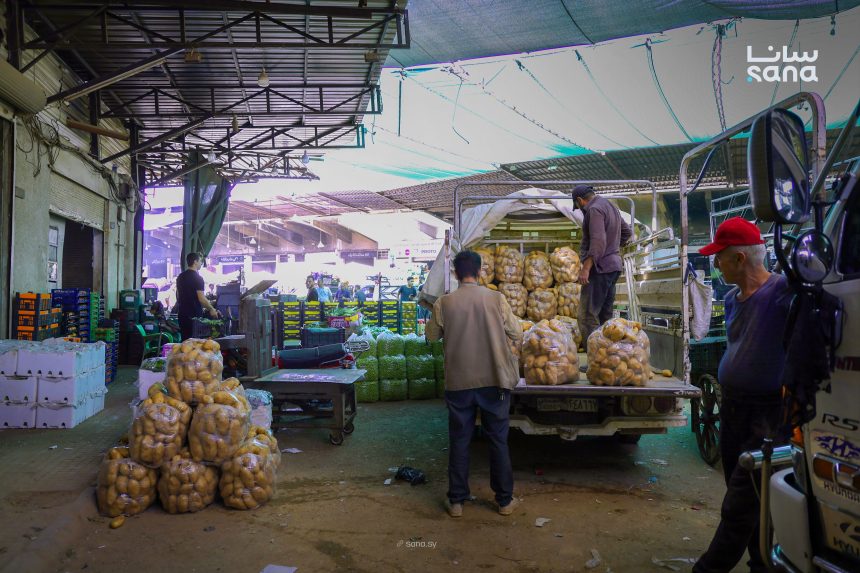
Fifteen Thousand Tons to the Gulf
Damascus's main wholesale produce market, in the Zablatani area, exported about 15,000 tons of fruit and vegetables to Gulf markets during September 2026. The shipments moved in roughly 600 refrigerated trucks, each carrying about 25 tons.
Apples, grapes, pears and potatoes were among the main products sent abroad, alongside other fruits and vegetables drawn from the autumn harvest.
Six Markets Across the Gulf
The produce reached the United Arab Emirates, Oman, Kuwait, Saudi Arabia, Bahrain and Qatar. Iraq was also named as a major destination for Syrian agricultural exports, giving growers several regional outlets at once.
All shipments were recorded at border crossings under official data, according to a member of the market's fruit and vegetable exporters committee, who described the volumes as part of the regular monthly trade.
What Drives the Flow
Export volumes depend on production levels, product quality, demand abroad and transport costs, as well as conditions in the importing markets. When any of these shifts, the quantities that leave the market each month move with them.
Prices are set by supply, demand and quality in both local and foreign markets, rather than by a fixed schedule, so the value of each shipment can vary from one month to the next.
A Regulated Calendar
Agricultural trade is guided by a monthly calendar issued by the Ministry of Agriculture, which lists the products barred from export or import in any given period. The calendar is based on surveys of cultivated area, production estimates and the needs of the local market.
The mechanism is meant to keep enough supply at home while allowing surpluses to be sold abroad, balancing domestic availability against export earnings.
Produce in Syria's Export Mix
Regular shipments of fresh produce to higher-income Gulf markets point to recovering trade channels for Syrian agriculture, a sector that depends on open regional borders and reliable refrigerated transport to reach distant buyers.