Offshore Block in Focus
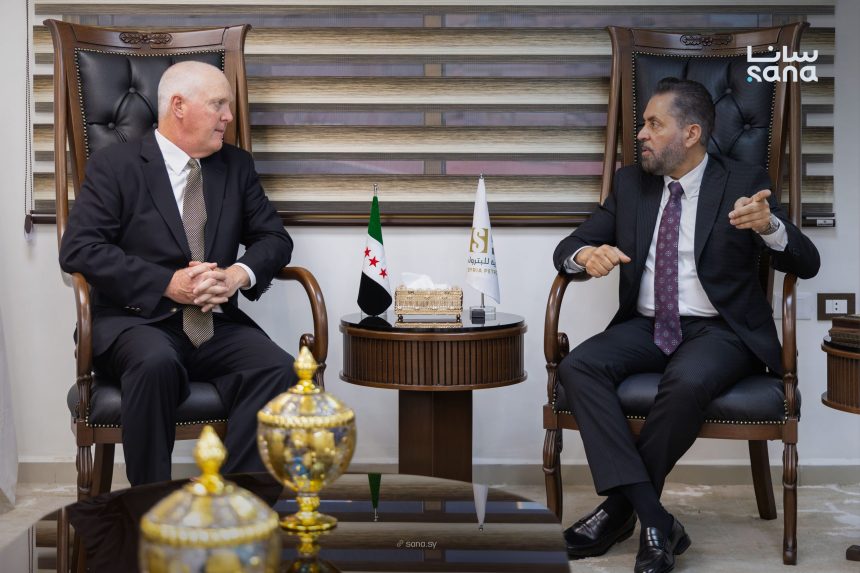
Syria's state oil company and a major United States energy firm held talks on 23 June 2026 about turning a signed memorandum of understanding into a binding agreement to explore an offshore block in the eastern Mediterranean. The discussions centered on converting the memorandum covering Block 1 into an executive contract that would commit the partners to actual exploration work.
The head of the Syrian Petroleum Company, Youssef Qiblawy, took part in the talks, which also touched on broader cooperation across the oil and gas sector.
Pipeline Revival on the Table
The two sides weighed bringing the American company in as a strategic partner to help revive the Kirkuk-Baniyas crude oil pipeline, the cross-border route that once carried Iraqi oil through Syrian territory to the Mediterranean port of Baniyas. The line has sat idle since it was knocked out of service during the country's long conflict.
Restoring the pipeline and its associated oil terminals formed a central part of the agenda, alongside the offshore exploration file.
Gulf Firms in the Mix
Emirati companies were also named in the discussions on rebuilding Syria's oil-handling infrastructure, reflecting a widening circle of foreign players eyeing the sector as the country reopens to international investment.
No financial terms, timelines, or signed contracts were announced, and the offshore arrangement remained at the memorandum stage pending the move to a binding deal.
Why It Matters for the Pound
Foreign capital in oil and gas is among the few levers that could deliver the hard-currency inflows Syria needs to steady the Syrian pound (SYP), which traded near 14,050 to the US dollar (USD) on 24 June 2026 after slipping about 2.6 percent over the previous week.
A firm commitment from an international major would mark one of the most significant energy investments since sanctions on the country began to ease.
From Idle Fields to New Output
Syrian crude output has run above 100,000 barrels per day in 2026, far below the roughly 386,000 barrels a day pumped before 2011, with proven reserves estimated near 2.5 billion barrels. Reviving offshore exploration and the cross-border pipeline could, over time, lift production and restore a key source of state revenue.