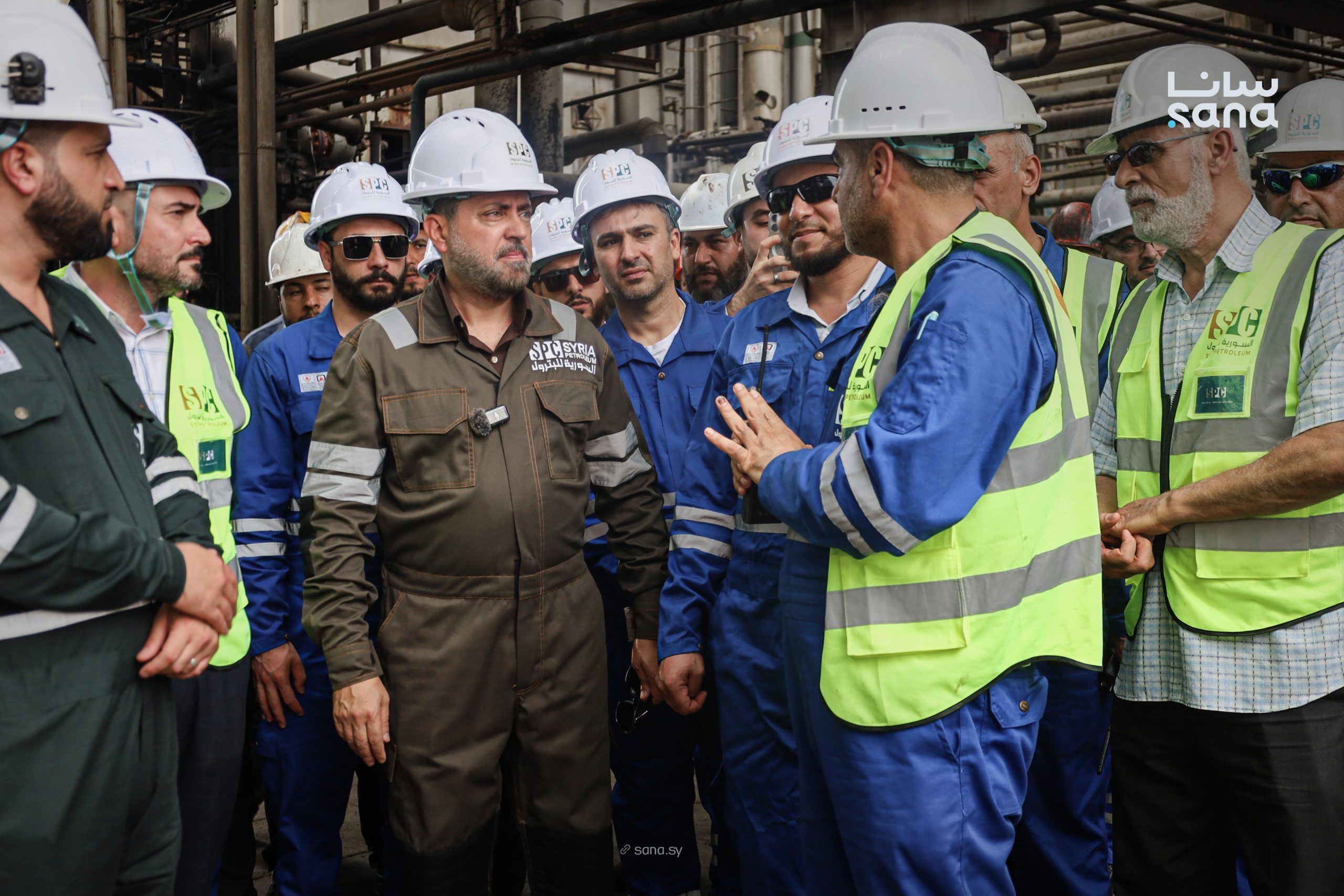
Refinery Overhaul on the Coast
Maintenance work is under way at the Banias refinery in Tartus province on Syria's Mediterranean coast, part of a plan to lift the plant's throughput and firm up domestic fuel supply. Officials confirmed the scope of the works on 7 September 2026, saying they reach nearly every production unit.
The plant is a mainstay of domestic fuel processing, turning crude into gasoline, diesel, kerosene and cooking gas for the local market.
Target of 130,000 Barrels
The overhaul aims to raise processing capacity from about 80,000 barrels per day (bpd) to roughly 130,000 bpd, an increase of some 50,000 bpd. Officials framed the effort as restoring readiness rather than adding new units.
Higher throughput would expand local output of benzene, diesel, kerosene and liquefied petroleum gas (LPG), the derivatives most exposed to shortages.
Reactor and Distillation Work
The program covers replacement of a reactor that officials said had not been changed in more than 40 years, alongside rehabilitation of the atmospheric and vacuum distillation units, the improvement section, hydrogenation and sulfur-processing units, and the on-site power station. Buildings, roads and safety systems are also being upgraded.
Work includes replacement of the reactor and rehabilitation of the distillation unit and power station.
Timeline and Fuel Continuity
Work on the distillation units and power station is expected to take about two months, while the improvement section is projected to need around three months, with the extra time attributed to the age of the reactor being swapped out.
The Ministry of Energy said it had prepared contingency plans to keep supplies flowing while units are offline, an acknowledgment that pausing processing lines carries a near-term risk to availability.
Weight for the Import Bill
Domestic refining has covered only part of consumption, with shortfalls met through imports that drain scarce foreign currency. Restoring capacity at Banias, if completed on schedule, would let more demand be met from local processing and ease pressure on the fuel import bill.