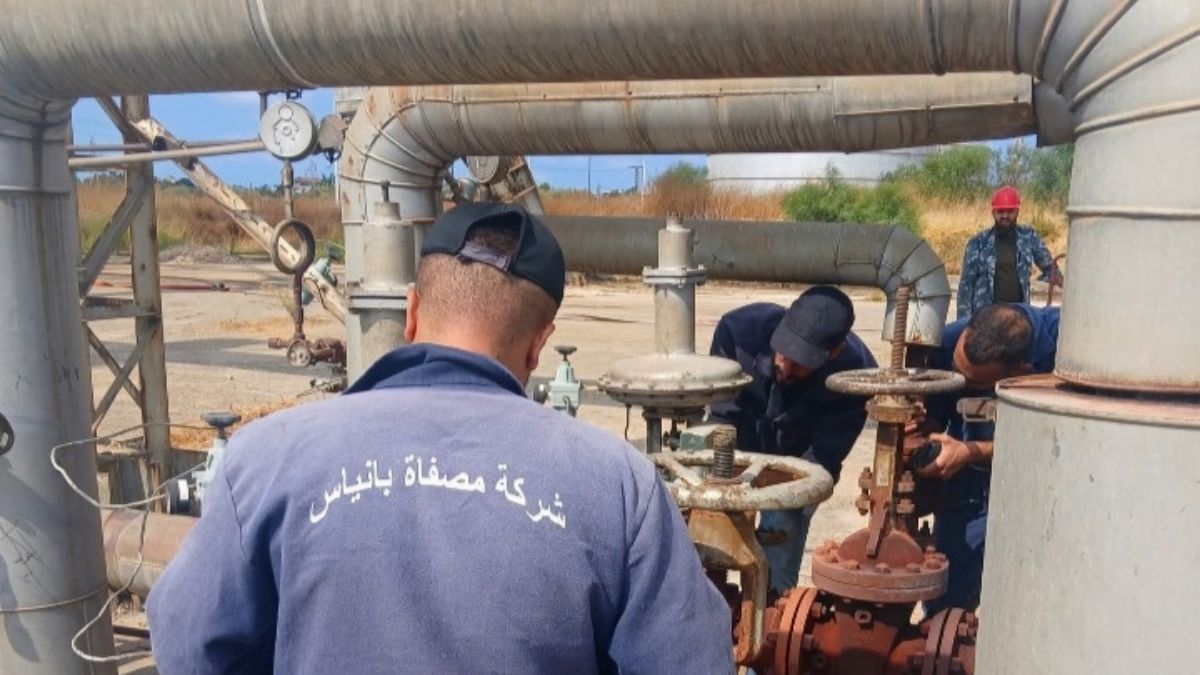
Refinery Restart Confirmed
The Syrian Petroleum Company said the Banias refinery returned to full operational capacity on 18 May 2026 after completing scheduled maintenance, restoring Syria's second-largest crude-processing facility to active service.
Technical teams carried out engineering work across the distillation, improvement, and hydrogenation units before the plant resumed processing at its standard configuration.
Scope of Maintenance Work
The program covered welding on the live-steam header pipeline, repairs at the pressure-reduction station, and servicing of electrical valve connections on boilers 1, 3, and 5. Crews also restored electrical cable connections in transformation stations 1 and 3 and brought the 106-A1 fan in the improvement section back online.
Engineers estimated that the upgrades saved roughly 40 work-hours per maintenance operation, a measure of how much faster repeat servicing should run under the renewed configuration.
Capacity and Crude Throughput
The Banias plant was originally designed in 1975 to process 6 million tons of crude annually, with a feed-blend ratio that can range from 80 percent light and 20 percent heavy to a 50/50 split between the two grades.
Operational records since 1988 show the refinery has at times exceeded its design capacity, running between 102 and 117 percent. The company reported a 30 percent gain in processing capacity following the latest maintenance round.
Iraqi Tanker Volumes
Inbound tanker activity reflects the renewed throughput. The company reported that the number of Iraqi tankers handled rose to about 500 per day as of 2 May 2026, an inflow of imported crude that the upgraded units are now positioned to absorb.
Why the Restart Matters
Banias sits on the Mediterranean coast north of the city of Banias in Tartus governorate and ranks as Syria's second refinery after the larger plant in Homs. Its return to full operation is significant for domestic fuel availability and for the country's positioning as a transit point for Iraqi crude moving through Syrian territory toward the coast.
With the maintenance round behind it, the refinery is set up to handle higher daily volumes of imported crude alongside its standard processing role.