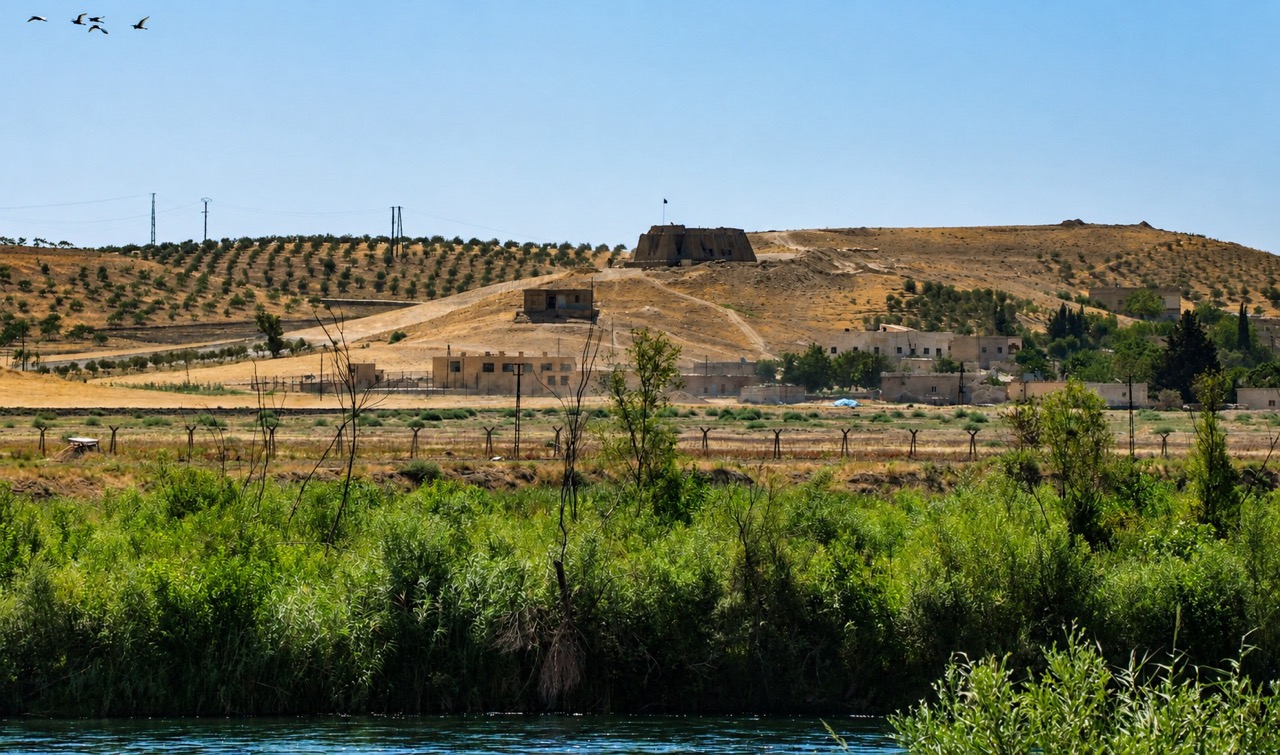
Border Zone Proposal
An association representing Turkish garment manufacturers has proposed establishing industrial production zones along the Syrian border, leasing a strip of Syrian territory for up to 99 years to host factories that would employ Syrian refugees returning from Turkey.
The plan has triggered open debate inside Turkey and remains without an official Syrian response. Backers position it as a long-term industrial corridor financed with possible international support; opponents argue it would hollow out manufacturing inside Turkey itself.
Geography and Scale
The proposed strip would run parallel to the 444-kilometer Syrian-Turkish frontier. Two depth variants are circulating: 15 kilometers in the earlier framing and as much as 30 kilometers in an expanded version that surfaced in subsequent discussions.
The 99-year lease horizon is positioned as essential to drawing development-scale capital into the corridor over time.
Returning Refugees and Jobs
The association ties the project explicitly to employment for Syrians returning home from Turkey, presenting the zones as a way to anchor manufacturing capacity close to where workers settle.
Tuygar Narbay, who chairs the association and runs the Izmir-based textile firm Narkontteks, has presented the framework as part of a regional supply strategy linking Turkish industry to a returning Syrian workforce.
Pushback from Turkish Industry
Turkish labor unions and several domestic manufacturers oppose the plan, warning it would shift jobs out of Turkey and damage domestic industrial capacity. Burak Sirtbaş, a council member at the Aegean Chamber of Industry, cautioned against "a new wave of relocation toward Syria" and pointed to earlier failed attempts at similar zones in southeastern Anatolia.
Awaiting Damascus's Response
Turkey's industry and commerce ministries have signaled openness to the proposal in early discussions. The Syrian government has not formally responded.
The proposal is being advanced by the industry body in its 50th year, and remains a framework circulated for advocacy. Without a Syrian counterpart at the table, no implementation timeline has been put forward.