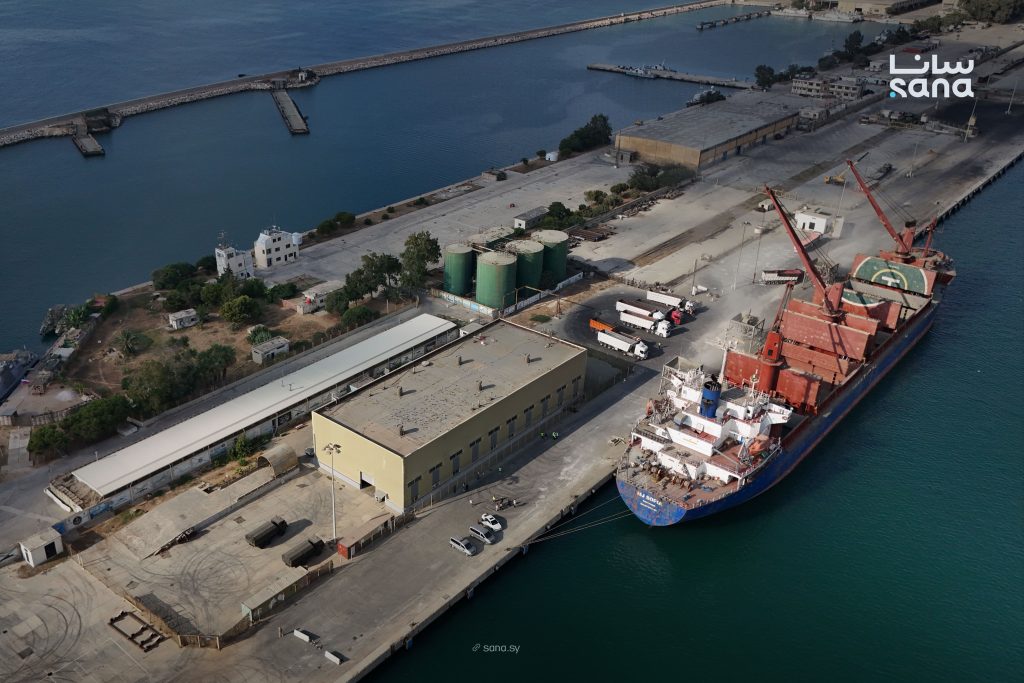
Fourth Dock Goes Live
The fourth dock at Syria's Tartus port entered commercial operation on 11 August 2026, receiving its first vessels and beginning docking and cargo-handling work. The launch followed completion of the dock's transfer, together with its buildings, facilities, and storage yards, into the port's operating system.
The first ship berthed and unloaded its cargo the same day, marking the start of commercial activity at the berth and adding fresh capacity to receive vessels and move goods.
Berth Specifications
The dock extends 630 meters along the waterfront, with a graduated draft that runs from 10 meters on its eastern side to 13.20 meters on the western side. Its specifications allow three large vessels to berth at the same time, with loads reaching 55,000 tons.
Adjacent storage areas support handling and warehousing, while the neighboring fifth dock is reserved for roll-on/roll-off ships that carry vehicles and wheeled cargo, allowing the two berths to work in tandem.
From Russian to Syrian Hands
The dock passed to Syrian civilian administration under a memorandum of understanding reached with Russia that reorganizes the Russian presence on the Syrian coast. The understanding places civilian-use facilities under the Syrian state, foremost the fourth commercial dock at Tartus and Hmeimim airport.
The arrangement followed roughly a year and a half of talks led by the Foreign Ministry, and provides for the two sites to be brought gradually under civilian management.
A Strategic Gateway
Handing the berth to national civilian management gives the Syrian state direct control over a working commercial gateway on the Mediterranean coast. Officials say the added dock strengthens the port's capacity to receive ships and handle varied cargo, smoothing the flow of goods through the facility.
Relief for a Crowded Port
Officials expect the added berth to ease congestion and reduce pressure on the port's other docks, shortening the time large ships wait to unload. The change is projected to speed loading and unloading and raise handling and productivity rates.
The berth is designed to cut waiting periods for large vessels and offer faster service to shipping clients, described as a qualitative step for the facility's operational capacity.