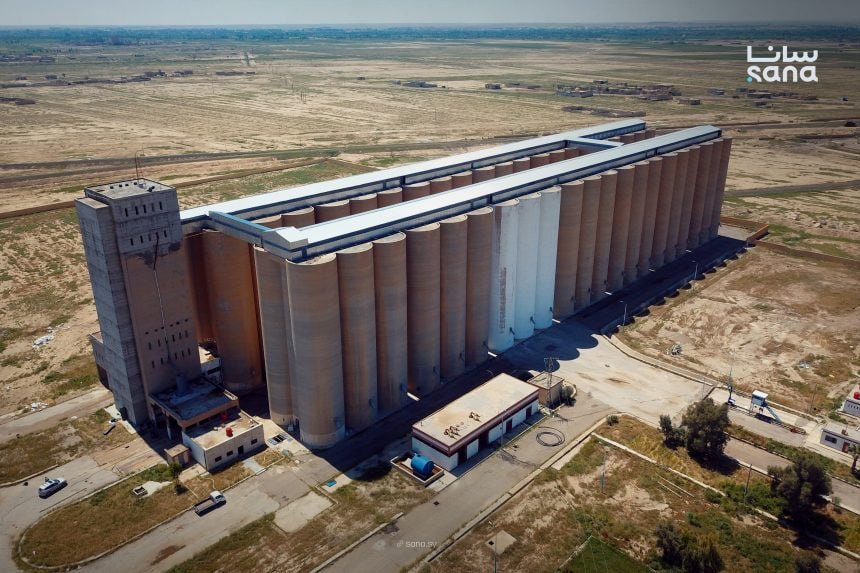
Record Wheat Intake
Syria's state grain authority has received more than 2.4 million tons of wheat from the current season's harvest, its director general said on 21 July 2026, describing the intake as part of a drive to rebuild the country's strategic food reserve.
Including stocks carried over from earlier seasons, the authority said it held 3,314,700 tons of wheat as of 18 July 2026 — about 2.4 million tons of newly delivered grain and 914,700 tons of older stock, with the total shifting daily as deliveries and milling continue.
Rebuilding Storage
Officials said the higher intake followed a plan to raise storage capacity by repairing and reopening silos and warehouses that had fallen into disrepair. Reconditioned sites include facilities at Adra, Qalaat al-Madiq, Deir ez-Zor, Meskeneh and Nawa, among others.
Additional open-air yards and warehouses were rehabilitated at locations such as Khan Sheikhoun and Saraqib to hold the crop safely during the peak of the delivery season.
Reach Across Governorates
The authority said it operated 84 wheat receiving centers across 11 governorates to reduce congestion as farmers delivered their crop. Emergency storage arrangements were set up in Raqqa and Hasakah, where grain was held in available yards and warehouses before being moved to silos and mills.
Easing the Harvest
Farmers were offered an online platform to book delivery slots in advance, a measure intended to speed up receiving and cut waiting times. The authority also said it covered transport costs for growers in remote areas, including moving wheat from Hasakah to interior centers in Homs and Damascus, and reactivated milling capacity in Sweida and Quneitra.
Food Security Stakes
The authority framed the effort as central to maintaining the strategic reserve and securing flour for bakeries. It said receiving would continue in parallel with repairs to storage sites so that the full quantity delivered by farmers could be absorbed.