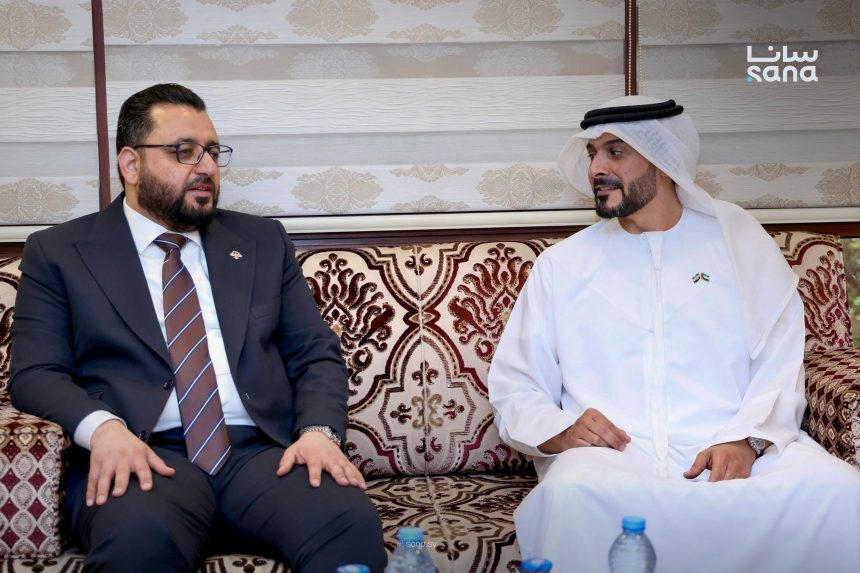
Emirati Delegation in Damascus
Syria's Minister of Agriculture, Bassel al-Swidan, met on 22 June 2026 with a delegation from an Emirati food-security group to discuss agricultural investment across several Syrian governorates. The delegation included executives responsible for food security and agricultural operations.
The talks centered on long-term cooperation and on opening export channels for Syrian produce to Gulf markets. The meeting is part of a broader effort to draw Gulf capital into Syria's farm sector, which was disrupted by years of conflict.
Two Agreements in the Pipeline
The two sides outlined two prospective agreements: one covering long-term agricultural investment inside Syria, and a second governing the export of Syrian crops. Neither side disclosed the financial value of the proposed investment.
Officials framed the arrangement as a first stage that could expand if early shipments and pilot projects meet quality and delivery targets.
A First Potato Shipment
As an opening step, an initial export shipment of 3,000 tons of potatoes is scheduled to move through a Syrian agricultural exporter. The consignment is intended to test logistics and quality standards before larger, recurring trade.
Governorates and Crops
The proposed investment would target farmland in Deir ez-Zor, Homs, Raqqa, Tartus, and Latakia. Beyond potatoes, the talks covered higher-value crops such as avocado and kiwi, pointing to an interest in diversifying what Syrian farms send abroad.
Spreading the projects across five governorates would tie the plan to both coastal and inland growing regions rather than a single area.
Why It Matters
Export deals and inbound investment are among the few channels that bring hard currency into Syria's economy and support rural employment. A recurring potato trade and Gulf-backed farm projects would, if realized, add a modest but tangible source of foreign-currency earnings.
For Gulf buyers, nearby farmland offers a way to secure food supplies, while Syrian growers gain access to a large, paying export market.