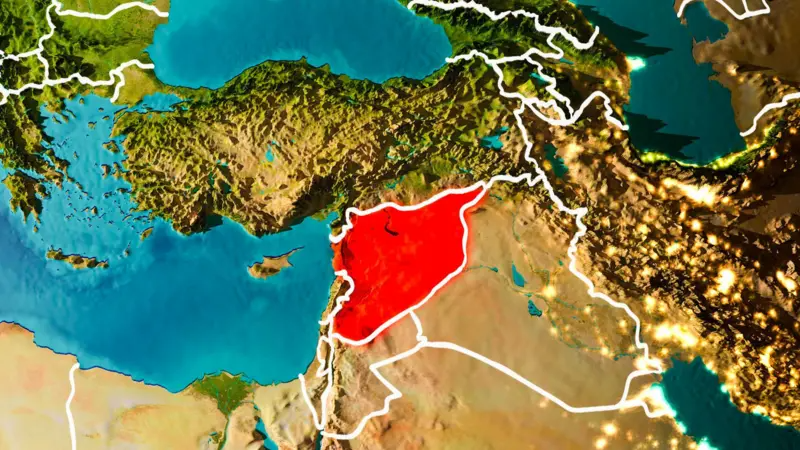
Syria on the Alternative-Corridor Map
Recent regional economic coverage has positioned Syria as a potential land and maritime link connecting the Gulf, Jordan, Turkey, and the Mediterranean, at a moment when Gulf states are looking for trade routes that reduce reliance on the Strait of Hormuz. The framing treats Syrian ports, roads, and planned rail links as part of a contingency map that has gained new relevance amid shipping-lane disruptions.
$800 Million Tartous Program
Dubai Ports World has announced completing a major phase of its $800 million investment program to modernize the port of Tartous. Three new mobile cranes are expected to lift the port's cargo-handling capacity by 40 percent.
A Land Route Already in Use
A road corridor connects the United Arab Emirates, Saudi Arabia, Jordan, and Syria, running from Al-Batha crossing through Al-Omari crossing to the Jaber-Naseeb crossing on the Syrian-Jordanian border. Journey times run 8 to 10 days for goods moving northward from Gulf ports, with an 11-day option available via Oman.
Rail and Multimodal Plans
Planned railroad connections between Saudi Arabia and Turkey over the next three to four years include a 400-kilometer segment linking Syria and Jordan. If built, that segment would shift the corridor from a truck-only route toward a multimodal chain combining roads, rail, and ports.
In April 2026, Syria, Jordan, and Turkey signed a trilateral transport memorandum aimed at activating trade routes, easing goods and passenger movement, and simplifying border procedures — the diplomatic scaffolding under the physical upgrades.
What It Means for the Economy
For Syria, the corridor push points to investment inflows into transport, storage, and logistics sectors positioned to benefit alongside Iraq, Jordan, and Oman. For Gulf shippers, a Syria-routed alternative diversifies exposure away from a single maritime chokepoint. The full commercial payoff depends on how quickly the port capacity, rail segment, and border procedures actually come online.