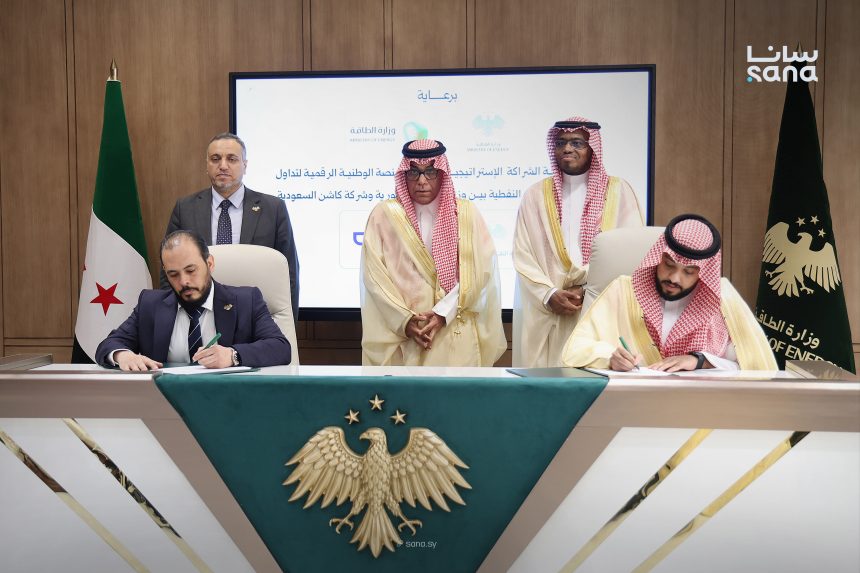
Energy Ministry Signs Digital Deal
Syria's Ministry of Energy signed a strategic partnership on 13 September 2026 with the Saudi information-technology company Cashen to build a national digital platform for governing the country's petroleum derivatives. The agreement was signed by Abdulkarim al-Jaafar, the ministry's director of technology and digital transformation, and by Omar al-Ramah, the chief executive of Cashen.
The platform is intended to bring the trading and distribution of fuel products under a single digital system, linking the state bodies that regulate the sector with the companies that move and sell fuel.
How the Platform Works
The system is designed to cover the entire petroleum derivatives chain, from regulatory authorities and fuel-station operators to transport and distribution firms, storage facilities and end consumers. It allows quantities to be monitored digitally in real time and directs supplies toward regions according to demand. Bringing those parties onto one system is meant to give a single, continuous view of how fuel moves from storage through to the pump.
The technology is described as automating the direction of fuel supplies across the country using advanced global systems, matching deliveries to where demand is highest.
Ten-Year Term, Sixty-Day Pilot
The partnership runs for ten years. A pilot phase lasting 60 days will begin at selected fuel stations in Damascus and other cities before any wider rollout, serving as a test of the system before it is extended more broadly.
The arrangement pairs Saudi technical expertise with Syrian staff, with the stated aim of transferring know-how to the national personnel who would operate the system.
Curbing Waste and Fraud
The ministry said the platform is meant to reduce waste, raise operational efficiency and prevent fraud through comprehensive monitoring of fuel flows. Tighter oversight of quantities was presented as the central benefit of moving the sector onto a shared digital record.
By matching supplies to where demand is greatest, the system is also intended to reduce mismatches between areas of surplus and shortage, extending the government's use of digital tools in managing the fuel supply chain.