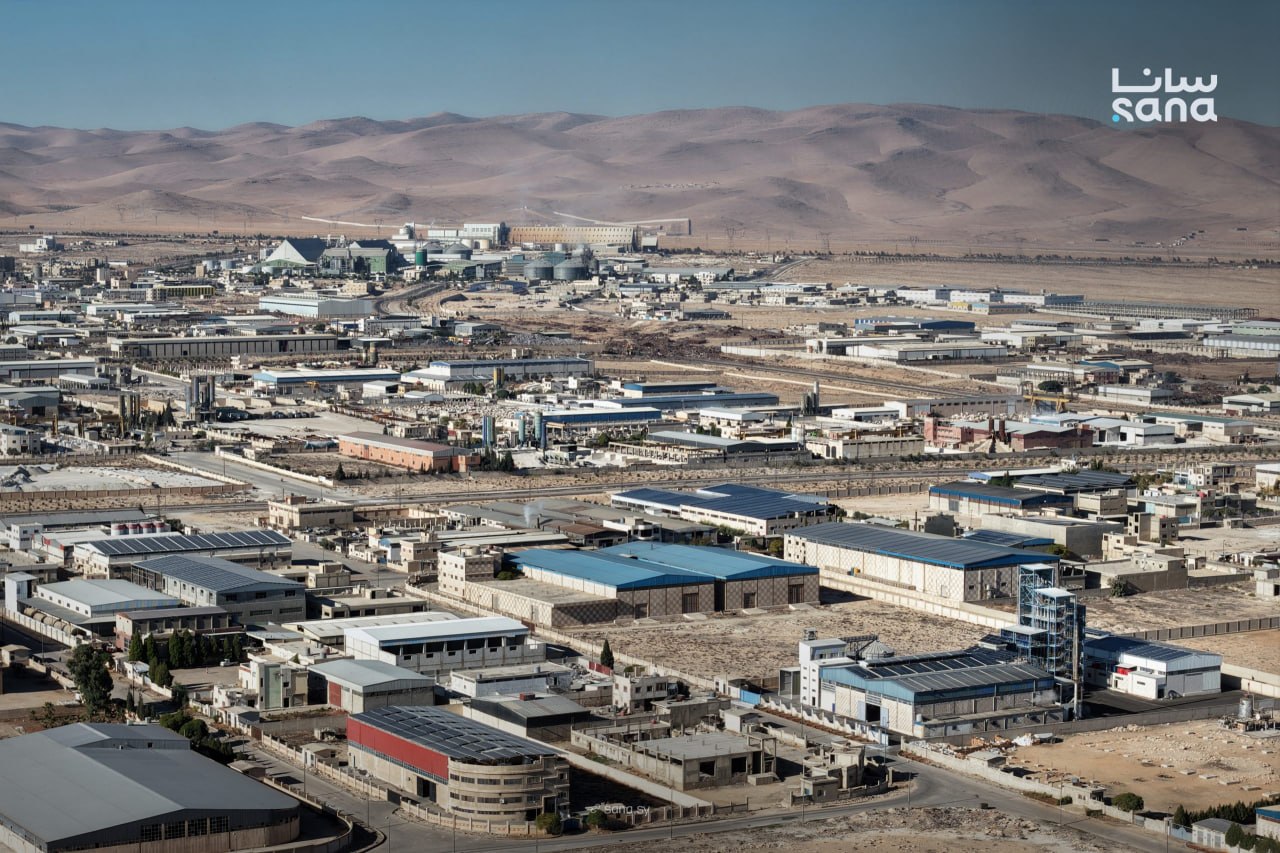
Industrial Investment Requests Surge
Syria's Ministry of Economy and Industry received 1,430 industrial investment requests in the first half of 2026, covering the period from January through June. The figures point to a marked revival of private industrial activity as investors move to establish, modernize, and expand production capacity across the country.
New industrial facilities dominated the applications, accounting for 996 requests, or roughly 70 percent of the total. A further 317 requests sought to update existing production lines, while 117 aimed to expand facilities already in operation.
Where Investors Are Betting
Chemical and plastic industries drew the most interest with 276 requests, followed by food industries with 255 and textile and clothing with 234. Engineering and metal industries recorded 172 requests, and building materials production accounted for 142.
The spread across sectors suggests investment is broadening rather than concentrating in a single industry, as manufacturers respond to domestic demand and the prospect of rebuilding supply chains disrupted over the past decade.
Aleppo Leads the Map
Aleppo governorate ranked first by a wide margin, drawing 668 requests, or 46.7 percent of the national total. Rural Damascus followed with 318 requests (22.2 percent) and Idleb with 168 (11.7 percent).
Together, the three governorates accounted for 80.7 percent of all industrial investment requests, underscoring how heavily the manufacturing recovery is clustered in the country's historic industrial heartland.
A Push to Modernize Machinery
The applications listed 7,147 new production machines, spread across 409 main categories and 164 tariff items. Requests for modern machinery and equipment made up 86.3 percent of all listed items, a sign that investors are prioritizing updated technology.
Packaging and wrapping equipment topped the list with 363 units, followed by cutting equipment with 338, transport equipment with 310, food industry equipment with 282, and 273 sewing machines.
Jobs on the Horizon
If the registered projects proceed, they are expected to create more than 15,000 jobs, a potential source of employment in an economy still working to absorb a large idle labor force.
The predominance of new-facility requests, rather than mere upgrades, signals that investors are willing to commit fresh capital to build capacity from the ground up.