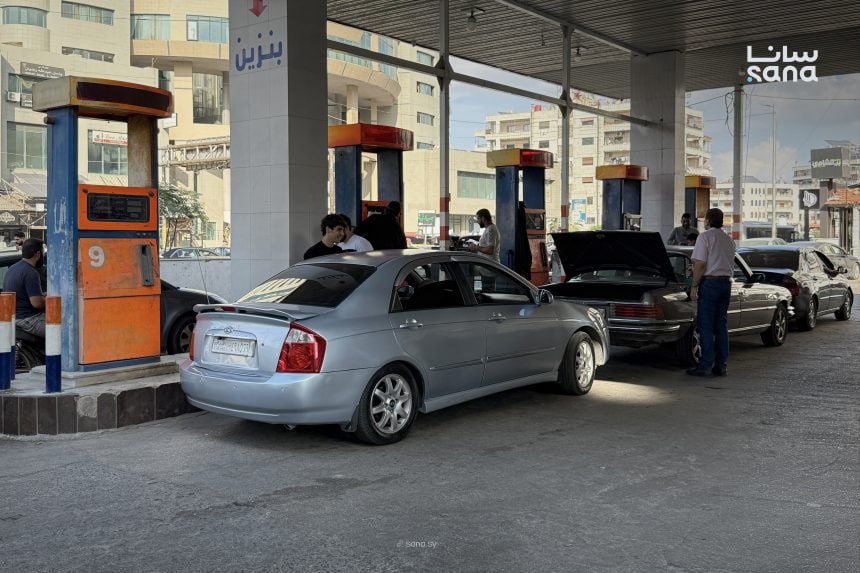
New Fuel Bulletin Takes Effect
A permanent committee that sets prices for petroleum products and mineral resources issued a new temporary bulletin on Saturday, 12 September 2026, with the revised rates taking effect at midnight on Sunday, 13 September 2026. The bulletin covers the main fuels used across the country for transport, heating, and industry.
The New Prices
Gasoline 95 is set at 195 Syrian pounds (SYP) per liter and gasoline 90 at 185 SYP, while diesel is priced at 175 SYP per liter. Residential gas is listed at 1,600 SYP and industrial gas at 2,560 SYP.
Heavier products were repriced as well: fuel oil at 52,800 SYP per ton, bitumen at 88,200 SYP per ton, and asphalt bitumen 60/70 at 59,440 SYP per ton. Aviation kerosene was set at 4.77 US dollars (USD) per gallon.
Why Prices Rose
The energy ministry described the increase as a temporary adjustment driven by an exceptional rise in the global cost of securing gasoline, diesel, and fuel oil. It said the change is meant to keep supplies flowing and products available in the local market.
The timing coincides with a comprehensive overhaul at the Banias refinery expected to last about two months. With domestic refining capacity reduced, the country must temporarily import more finished petroleum products.
How Prices Are Set
The pricing committee was formed under Decision No. 844 of 2026, issued by Energy Minister Muhammad al-Bashir on 23 June 2026, and is chaired by the deputy energy minister for oil affairs, Ghiath Diab.
Its members include representatives of the finance, economy, and industry ministries, the Central Bank of Syria, and specialized bodies in the oil and mineral sector. The committee weighs global markets, costs, the Syrian pound's exchange rate, and support mechanisms, and updates prices periodically.
What It Means for Households
Because the bulletin applies nationwide and took effect immediately, the new rates feed directly into transport, heating, and production costs. Diesel and gasoline prices in particular shape the cost of moving goods and running generators.
The move has been framed as temporary and tied to external costs and the refinery timeline, leaving open the prospect of further revisions once the Banias overhaul is complete and global conditions shift.