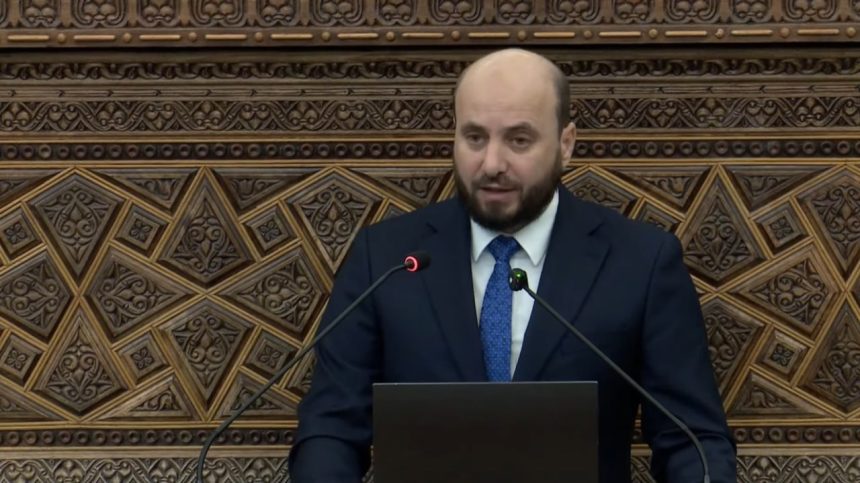
Energy Minister's Briefing
Syria's Minister of Energy, Mohammad al-Bashir, set out the country's oil and gas balance before the People's Assembly on 20 September 2026, describing a sector still operating well below national demand. He said crude output currently stands at about 112,000 barrels per day drawn from 78 working fields.
That level remains far short of the roughly 140,000 barrels per day the country produced in earlier years, leaving a wide gap between domestic supply and consumption.
An $831 Million Bill
To cover the shortfall, Syria imports around 150,000 barrels of oil per day, leaving a total gap of some 200,000 barrels per day between production and need. The monthly cost of importing crude oil and petroleum products was put at $831 million (USD).
A further 6.3 million cubic meters of gas are imported each day to feed power generation, at a cost of about $140 million (USD) a month, underlining how heavily the energy import bill weighs on the Syrian pound (SYP).
Gas Output Edges Up
Domestic gas production has risen to 8 million cubic meters per day, up from 6 million, though the country actually needs about 24 million cubic meters per day to meet demand.
Refining capacity was given at 150,000 barrels per day, meaning much of the imported crude and finished product is required simply to keep supply flowing to households and industry.
Fuel Demand Climbing
Pressure on supply is growing as the vehicle fleet expands, rising from 2.5 million to 3.6 million vehicles. Daily consumption was put at 12 million liters of diesel and 8 million liters of gasoline.
Those volumes help explain the queues and rationing that have shaped daily life, with any shortfall in imports quickly felt at filling stations and in electricity supply.
Path to Self-Sufficiency
Syria aims to reach self-sufficiency in oil by 2028, while natural gas production would need roughly seven years to reach satisfactory levels.
The Arab Gas Pipeline project, valued at about $250 million (USD) and linked to supply from Jordan, was cited as part of efforts to ease the country's energy and fiscal strain.