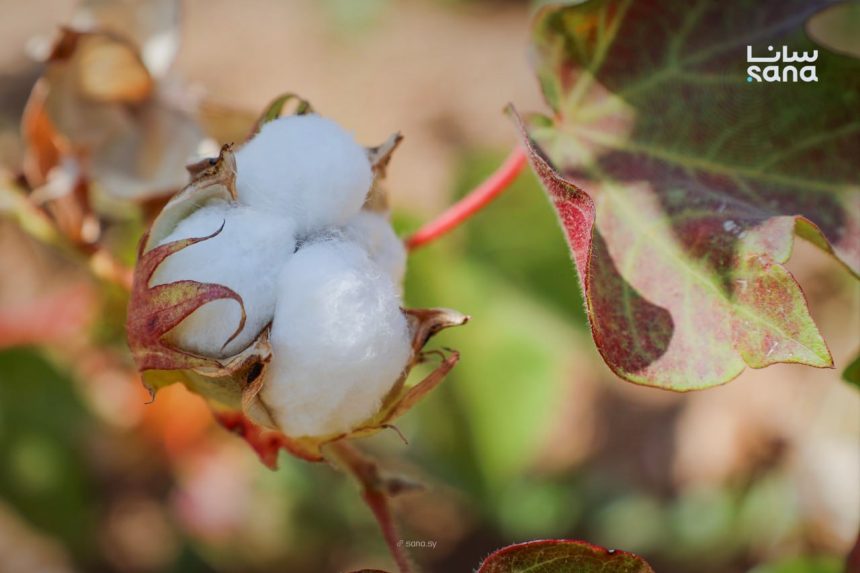
A Larger Harvest
Syria's cotton production has risen to about 79,467 tons this season, up from roughly 69,587 tons a year earlier, according to figures released on 6 October 2026. Officials put the sector's longer-term potential at 300,000 to 400,000 tons a year, framing the current crop as an early step in rebuilding a once-central cash crop.
The gain is modest against that ceiling, but it points to a sector slowly coming back after years of disrupted planting and idle processing capacity.
Mills Back in Service
The Muharda ginning mill in Hama resumed operations on 30 September 2026 after a four-year halt, running at a capacity of roughly 12 tons per shift. It joins the Al-Assi mill in Hama and the Tishreen mill in Aleppo as active facilities, while the Al-Fida mill in Hama remains out of service.
Uneven Across Regions
Output is spread unevenly. In the Al-Ghab plain, cultivation has fallen sharply, with about 12 tons harvested from 4.4 hectares against 450 hectares that had been planned. Deir ez-Zor has in the past produced roughly 4,500 tons from 2,300 hectares, underlining how far some growing areas remain below earlier levels.
Jobs and Varieties
About 5,000 workers are targeted for retraining programs tied to the sector's revival. Growers are planting six locally approved cotton varieties developed by the General Commission for Agricultural Scientific Research, part of an effort to lift yields and reduce reliance on imported seed.
Investment and Hurdles
A memorandum of understanding signed on 8 March 2026 between the economy ministry and Saudi company Kingdom Design set out plans to revive the textile industry and rehabilitate state-owned assets. Producers still face rising costs for seeds, fertilizer, fuel, and labor, alongside irrigation demands, pricing disputes, and the cost of moving cotton to ginning centers.