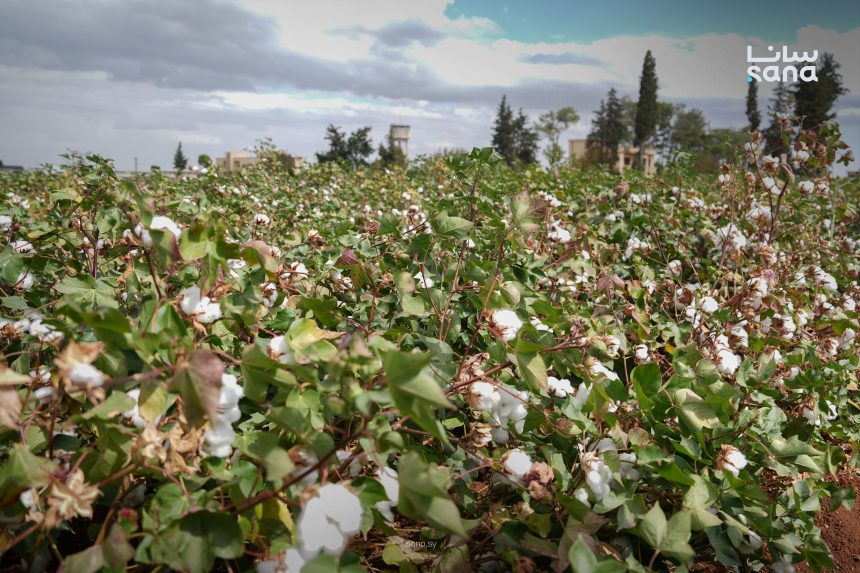
This Season's Acreage
About 32,000 hectares were planted with cotton across the country this season, against a target of 50,000 hectares. Expected output is put at roughly 100,000 tons, and about 75 percent of the planted area has already been harvested, with picking continuing on the remainder.
The planted area came in well short of the 50,000-hectare goal, leaving the season at roughly two-thirds of what authorities had aimed to bring under the crop.
A Subsidized Price
Farmers delivering raw cotton to government bodies are paid a subsidized 100 Syrian pounds (SYP) per kilogram. Of that amount, the General Establishment for Ginning and Marketing of Cotton covers 80 pounds and the Ministry of Agriculture covers the remaining 20 pounds.
The split keeps the farm-gate price above what the ginning body alone would pay, with the ministry topping up the difference as direct support to growers. Setting the rate through government channels gives producers a fixed reference point for the value of what they deliver.
From Field to Gin
Growers obtain a certificate of origin from the nearest agricultural directorate, then deliver their crop to approved transfer centers. From there the cotton moves to a gin in Aleppo, where it is received, sorted, classified and graded before marketing.
Ginning licenses have been granted to more than one private operator in the producing governorates, and further licensing is under way as the season progresses. The involvement of private gins alongside the state marketing body widens the processing capacity available to handle the harvest.
Exports and Licensing
Export licenses covering about 25,000 tons of ginned cotton were issued during 2026, pointing to a renewed effort to move the crop into foreign markets alongside domestic supply.
With a quarter of expected output already cleared for export, the season combines subsidized procurement at home with an outlet abroad, a mix that shapes both farm incomes and the crop's place in foreign trade.