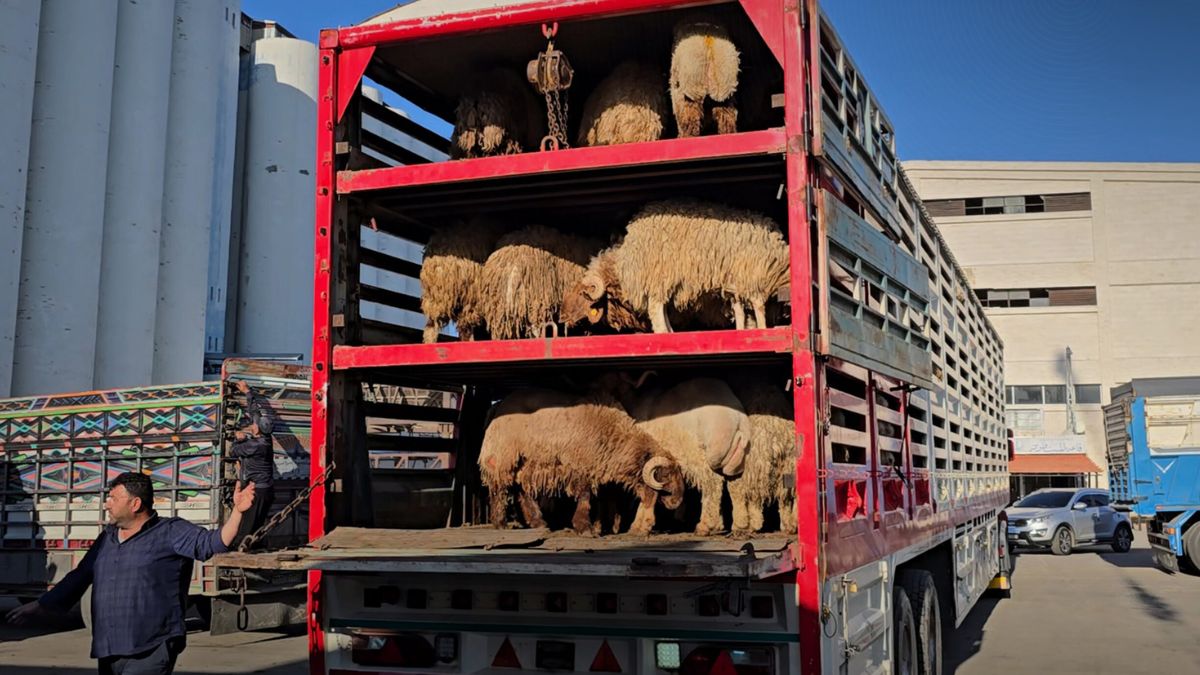
Awasi Exports Squeeze Local Plates
Live lamb in Syria has climbed above 7 US dollars (USD) per kilogram, the equivalent of roughly 97,000 Syrian pounds (SYP), in the run-up to Eid al-Adha. A single sheep now sells for between 350 and 425 USD — about five to six million SYP — and butchers expect further increases in coming days as holiday demand peaks.
The Syrian pound traded at 13,900 SYP for buying and 13,970 SYP for selling against the US dollar on 18 May 2026, the conversion backdrop against which retail meat prices are quoted.
The Export Quota and Its Origins
The pressure stems from a continuing licensed export of "Awasi" sheep, a fat-tailed breed prized in Gulf markets and especially in Saudi Arabia. Syria authorised the export of 200,000 male Awasi sheep and male mountain goats, plus 20,000 live cattle, according to the deputy minister of agriculture for animal resources, Ayham Abdel Qader.
The General Authority for Ports and Customs loaded the first official livestock shipment through Tartus port on 25 March 2025, framing it as a step toward reviving the export sector. The same day, Jordan's agriculture minister, Saeb Kharisat, confirmed a contract to import 400 tons of slaughtered Syrian lamb. Jordan produces only about 40 percent of its red-meat needs and imports the balance from abroad.
Numbers Behind the Surge
Inside Syrian markets, the price of boneless lamb has reached around 300,000 SYP per kilogram, while a whole carcass trades between six and seven million SYP. Live lamb stands near 95,000 SYP per kilogram and continues to climb.
Calves are cheaper but not immune. Live weight runs at about 60,000 SYP per kilogram, and slaughtered beef trades between 160,000 and 220,000 SYP per kilogram, the butchers' association said.
Slaughterhouses and Production Gaps
Mutaz al-Issa, the vice-president of the butchers' association, attributed the imbalance to weak local output rather than demand alone. Years of drought have cut female Awasi numbers, and pastureland has shrunk as plots are sold for construction. Direct government support for livestock breeders has been thin.
Only two authorised slaughterhouses operate in Damascus governorate, and both are currently idle for lack of maintenance and investment. When operational, the Zabaltani facility alone used to process between 600 and 700 sheep per day, leaving current daily slaughter figures largely undocumented.
Calls to Pause Exports
Al-Issa argued that exports make sense only when domestic supply outstrips demand. With output falling and demand surging before Eid, he urged authorities to suspend Awasi exports temporarily to keep prices within consumers' reach.
He also pressed for direct support to Awasi breeders, warning that without intervention the gap between local production and table demand will widen further into the holiday season.