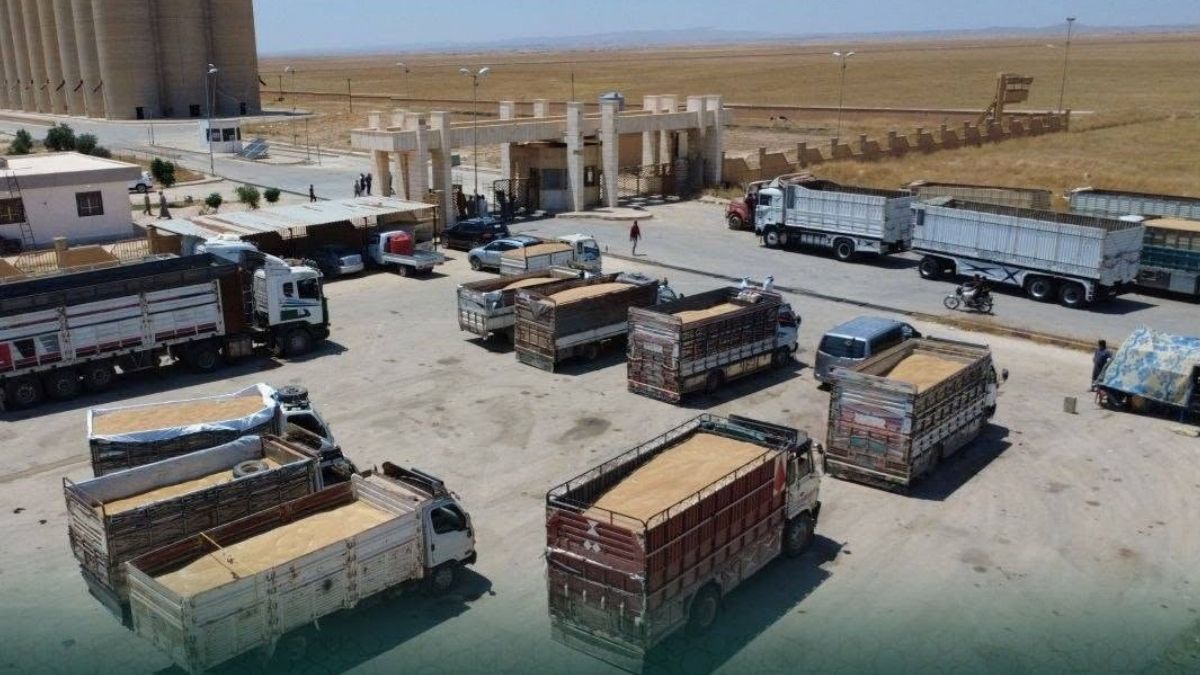
Hasakah Wheat Reaches Market
Farmers in Syria's northeastern Hasakah province had marketed roughly 62,000 tons of wheat as of 15 June 2026, as the season's harvest moved into government collection channels.
Payments to growers are being processed through designated banks in Hasakah, Qamishli, and Darbasiyah, routing this year's crop into the formal banking system.
Prices and Procurement
First-grade wheat is being purchased at 5.5 million Syrian pounds (SYP) per ton, the headline rate set for the strongest grade delivered to collection points.
The state grain body expects to receive between 800,000 and 1 million tons from the province this season, a volume that would anchor domestic grain supply for the months ahead.
Harvest by the Hectare
Irrigated wheat covered about 24,700 hectares this season and rainfed wheat about 105,200 hectares, alongside extensive barley and lentil plantings.
Some 902 harvesting machines were operating across the province, feeding 20 grain collection centers tasked with weighing, grading, and storing the incoming crop.
Storage Under Strain
Carryover stock of 400,000 to 500,000 tons from the previous season is already straining storage capacity before the bulk of the new harvest arrives.
Total provincial production is estimated at around 1.2 million tons, leaving collection centers to manage a volume well above what local silos were built to hold.
Fuel and Connectivity Hurdles
Fuel shortages and weak internet connectivity have slowed the electronic registration that growers must complete before delivering their crop, delaying parts of the marketing process.
Heavy rains improved this year's crop but pushed back ripening, leaving the harvest running later than in previous seasons.