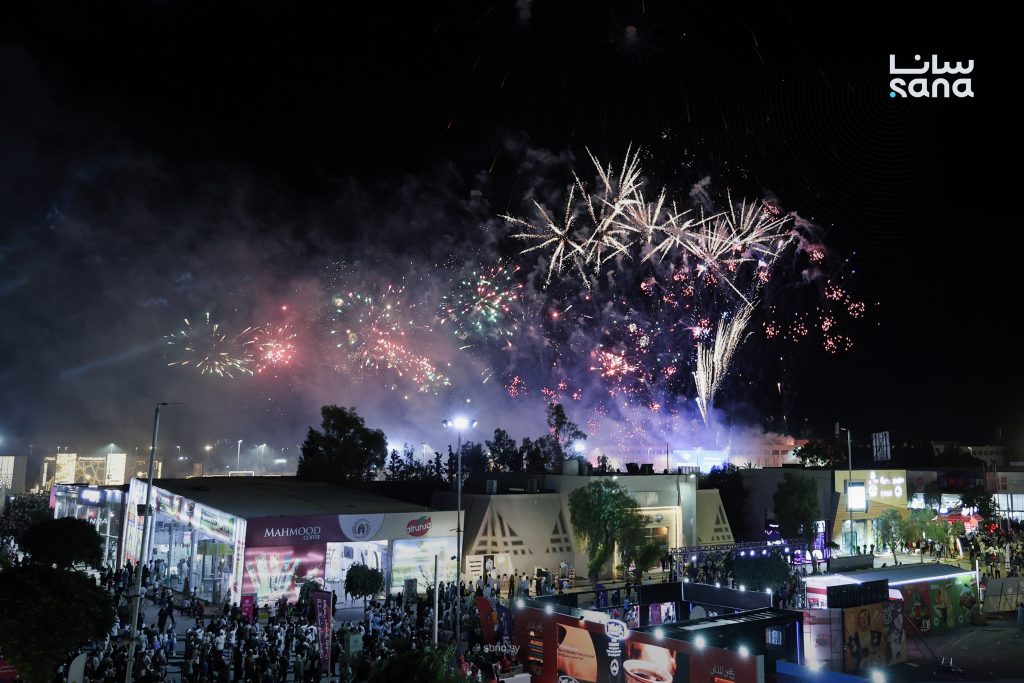
Ten-Day Fair Draws Sixty Nations
The 63rd Damascus International Fair concluded on 4 September 2026 after ten days of exhibitions, business meetings and forums under the theme "Syria rises again." The event ran on the Damascus fairground from 26 August and gathered close to 1,000 local, Arab and international participants representing about 60 countries.
The opening three days were reserved for business leaders, investors and official delegations, with business-to-business and business-to-government meetings focused on trade, industry and investment. Ministers, ambassadors and diplomatic missions attended alongside a large public turnout in the days set aside for visitors.
Industrial-City Agreements
Among the deals signed during the fair were agreements to develop and expand the Bab al-Hawa industrial city and to build an industrial city for marble and natural stone in Hasya, in Homs province. A further agreement covered the development of the Sheikh Najjar industrial city in Aleppo and the strengthening of its infrastructure.
A contract was also signed to establish the handicraft industrial zone in Raqqa, part of a wider effort to organize industrial and professional activity across the country's manufacturing hubs.
Reconstruction and Farm Accords
The fair produced three strategic contracts to rebuild and develop infrastructure and tourism and sports facilities in Raqqa. Cross-border cooperation featured as well, with alignment memorandums between the Syrian agriculture ministry and the Saudi ministry of environment, water and agriculture aimed at boosting agricultural investment.
New Economic Forum
Announced alongside the opening was the launch of the Damascus World Economic Forum, described as a platform for direct dialogue between the government, the private sector, investors and international partners. Its stated aim is to turn commercial participation into a structured economic track covering projects, contracts and partnerships.
The commercial program ran alongside seminars on reconstruction and digital transformation, including sessions on transport investment under public-private partnership models, the challenges of electronic payment and digital commerce, the role of industrial cities in attracting investment, and the development of a long-term financing system.
Government Services Unveiled
Beyond the commercial agreements, several public initiatives were introduced. The energy ministry launched a digital platform, the "Syrian Energy Portal," and the chambers of commerce union rolled out a "Tamkeen" program to train professional staff and support small projects. A separate initiative offered comprehensive health coverage for elderly relatives of the missing and detained.